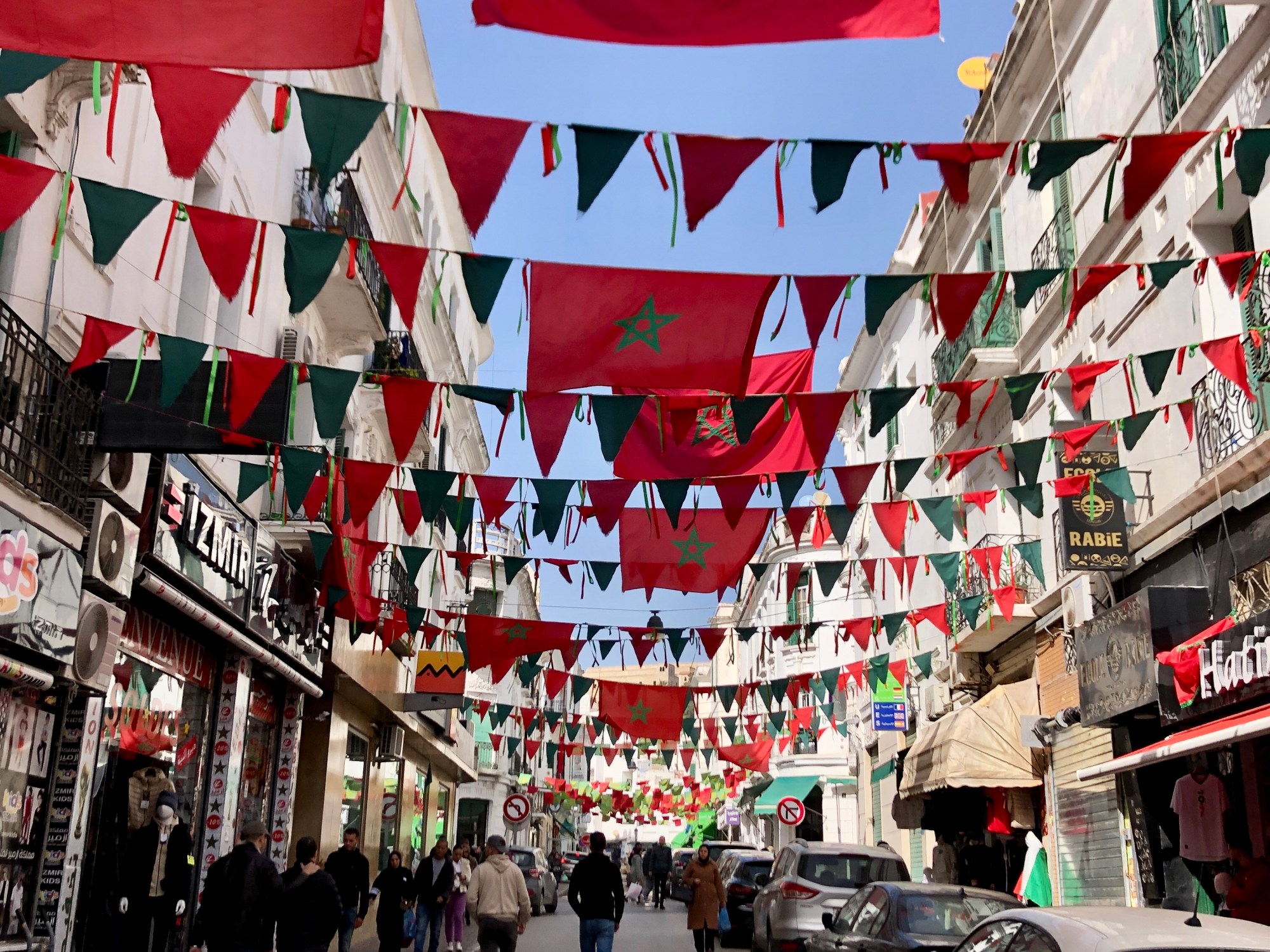
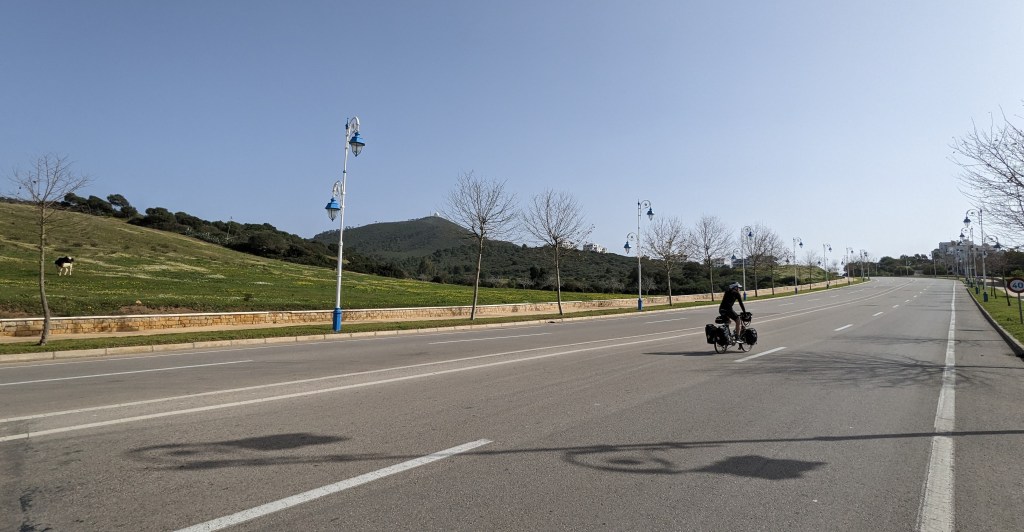
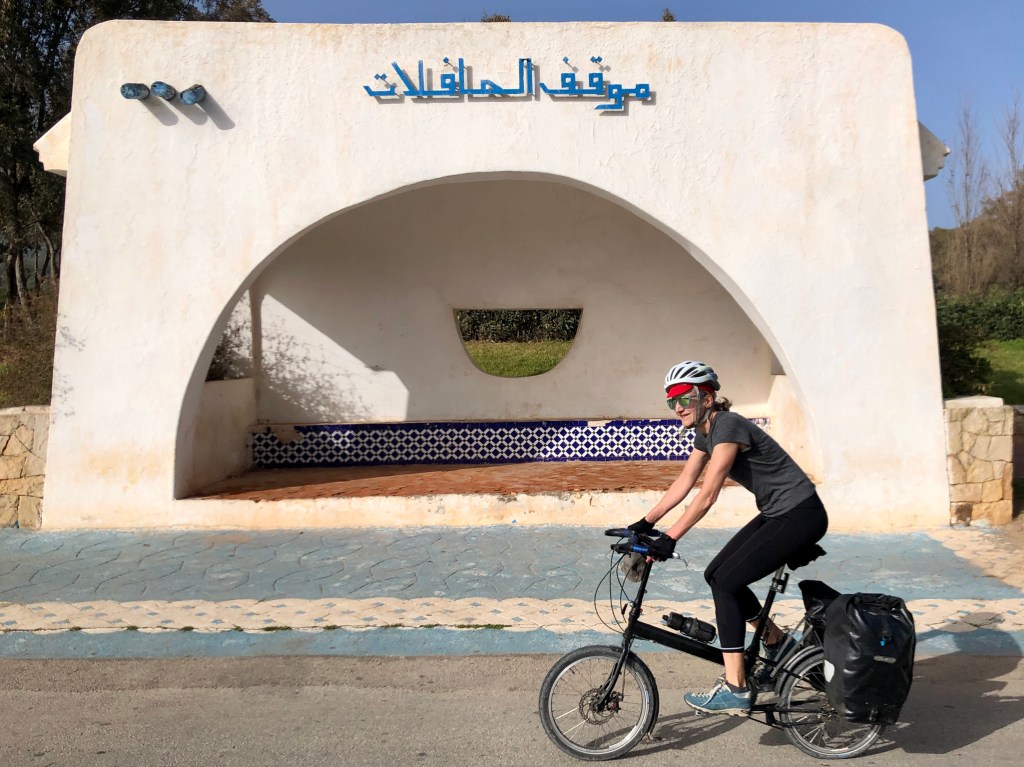
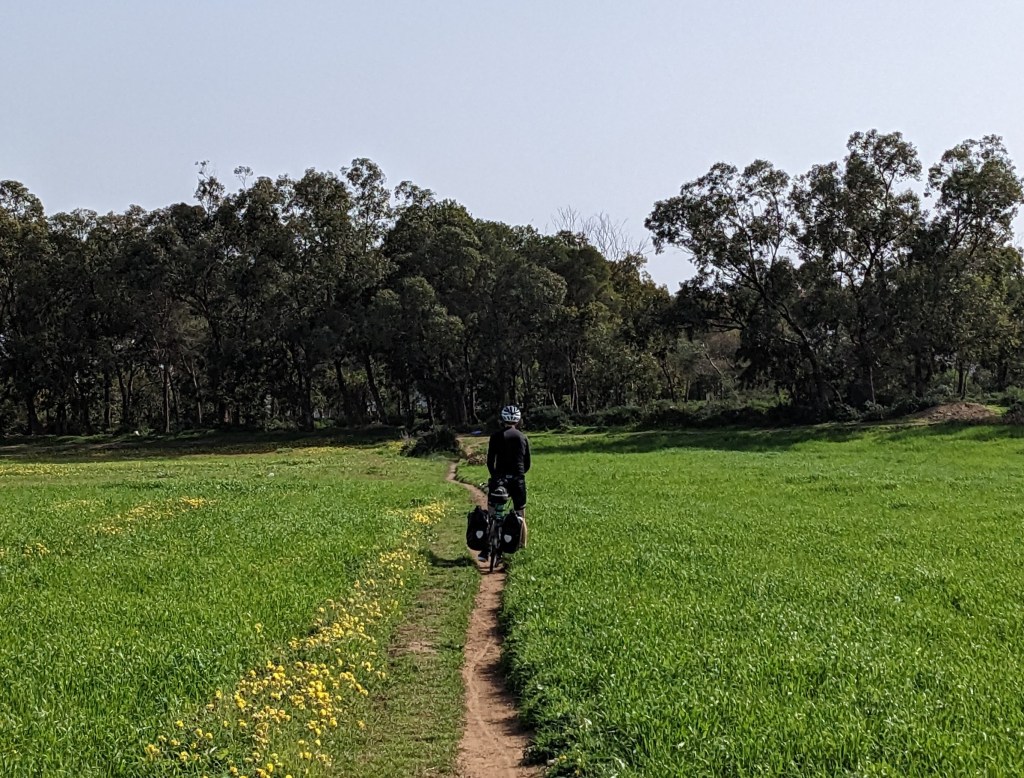
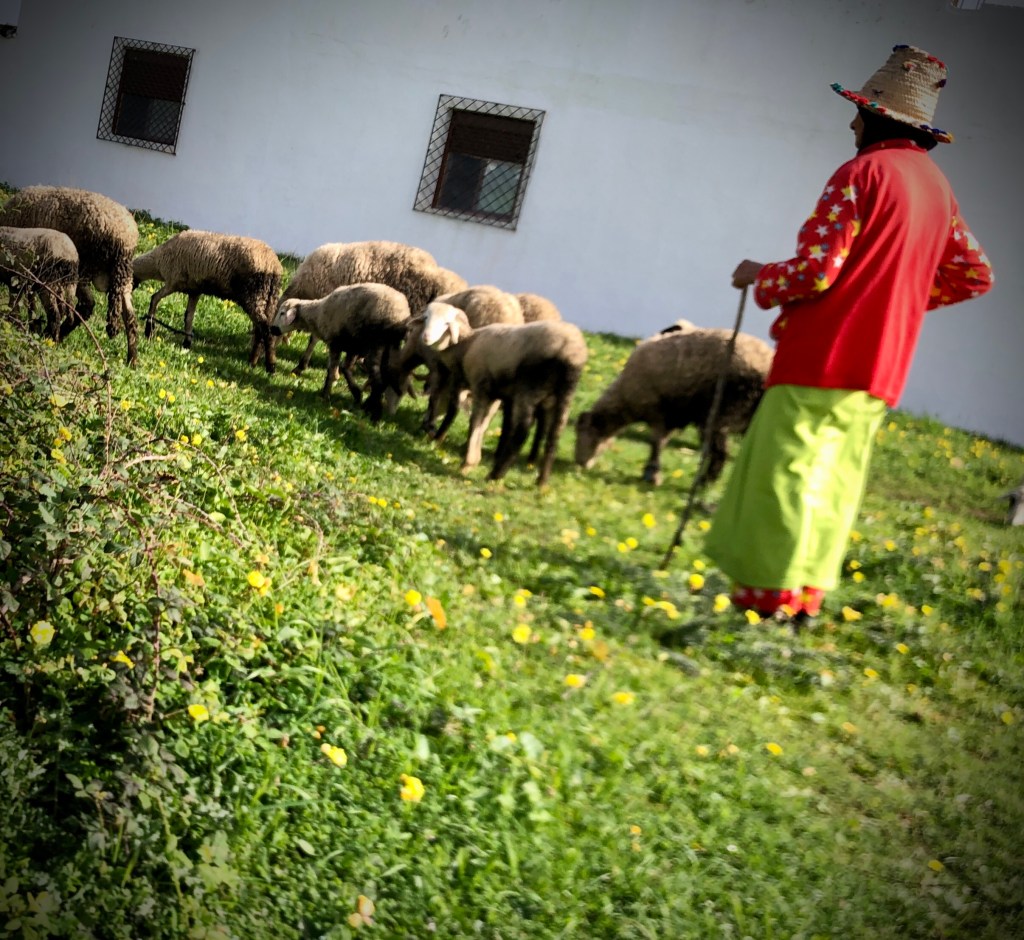
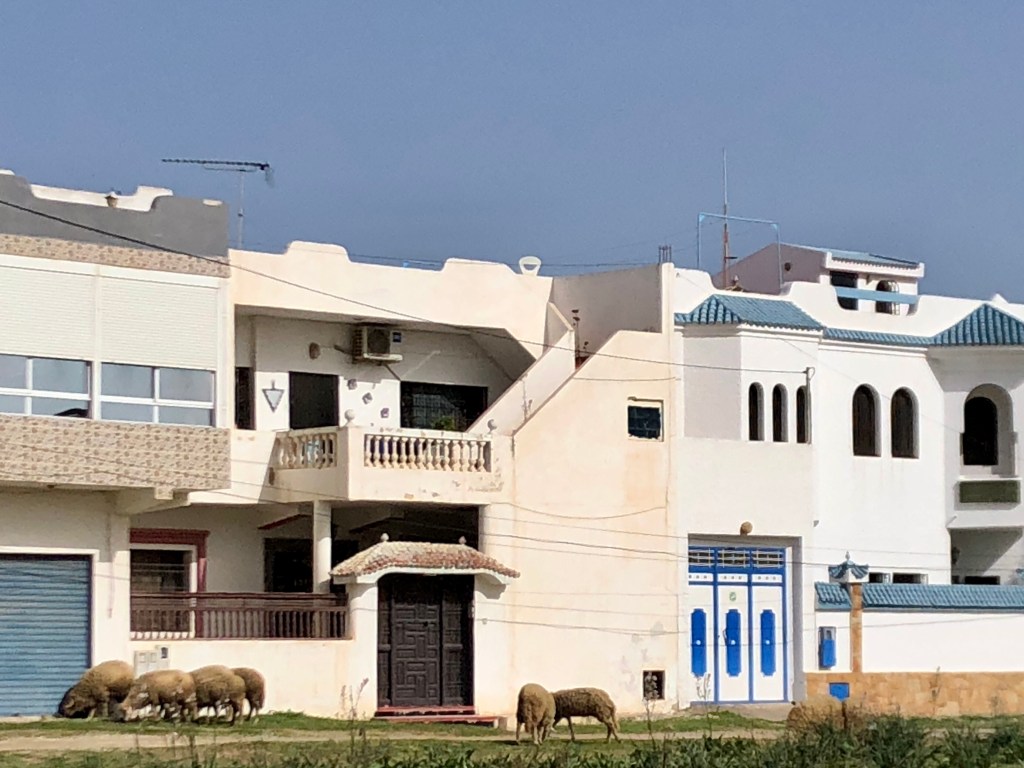
The transition from Spain to Morocco hits us immediately. Not only is the average income level lower (less than a quarter of Spain’s) and the population younger (average age 15 years younger than Spain), Morocco simply feels more foreign and chaotic to us, in many ways wonderfully so. Street and traffic patterns, to which we pay so much attention as we find our way through different towns and cities, confound us. In certain places the streets are four lanes wide, virtually empty of cars and attended by street sweepers every few blocks and in others they are barely a lane wide and packed with every manner of transportation imaginable. Beautiful bus stops sit empty but busses disgorge dozens of passengers in unmarked locations. In some cases the street grid literally turns into a goat path and in others suburban streets double as sheep pastures.
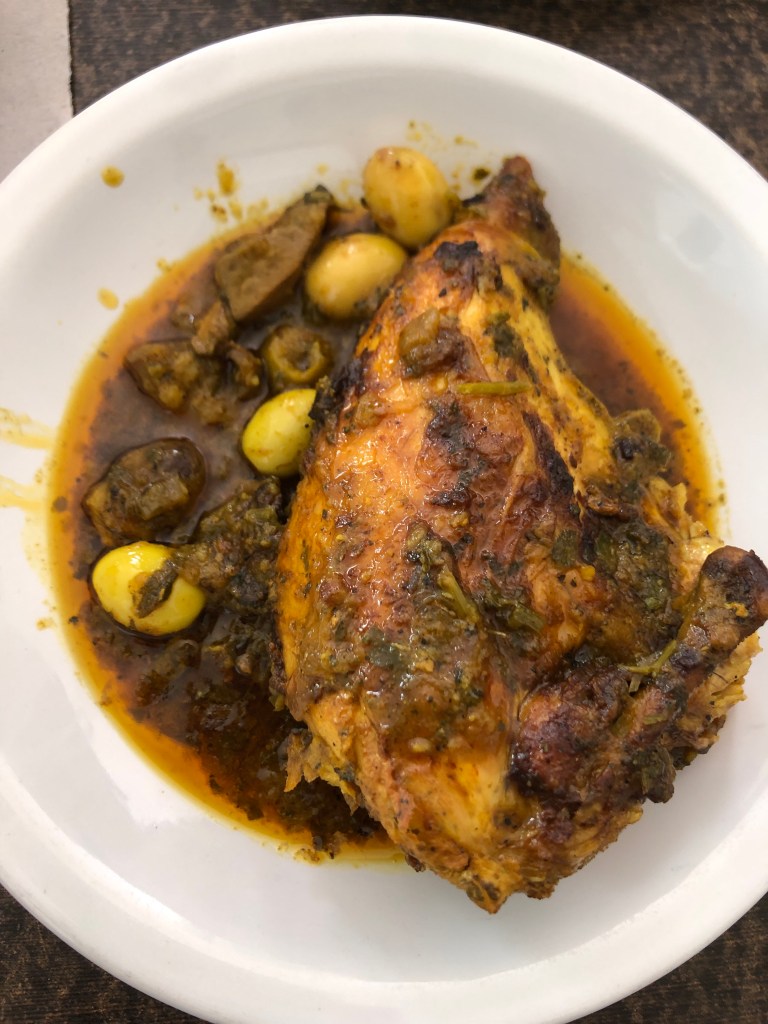
We make it to Tetouan by early afternoon, and, after riding through the steep, narrow and winding streets of the walled old town, find a hotel at the gates of the historic medina. A shower and delicious lunch of roast chicken, olives, salad and rice revives us and we set off to explore.
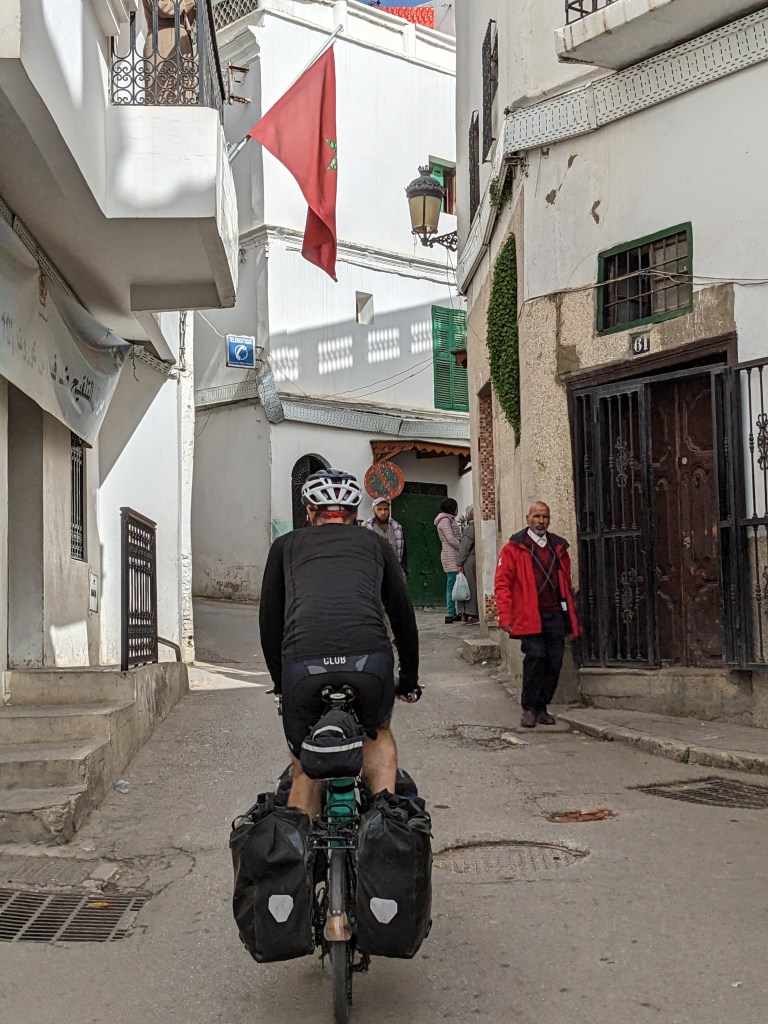
The Tetouan medina is thoroughly atmospheric, with vendors selling everything from freshly ground spices to fruit and vegetables to fish, unrefrigerated meat and live chickens to caged songbirds to pastries and fresh bread, not to mention the little junk stalls that sell random assortments of used remote controls, eye glasses and clothes. It truly is a sensory overload.
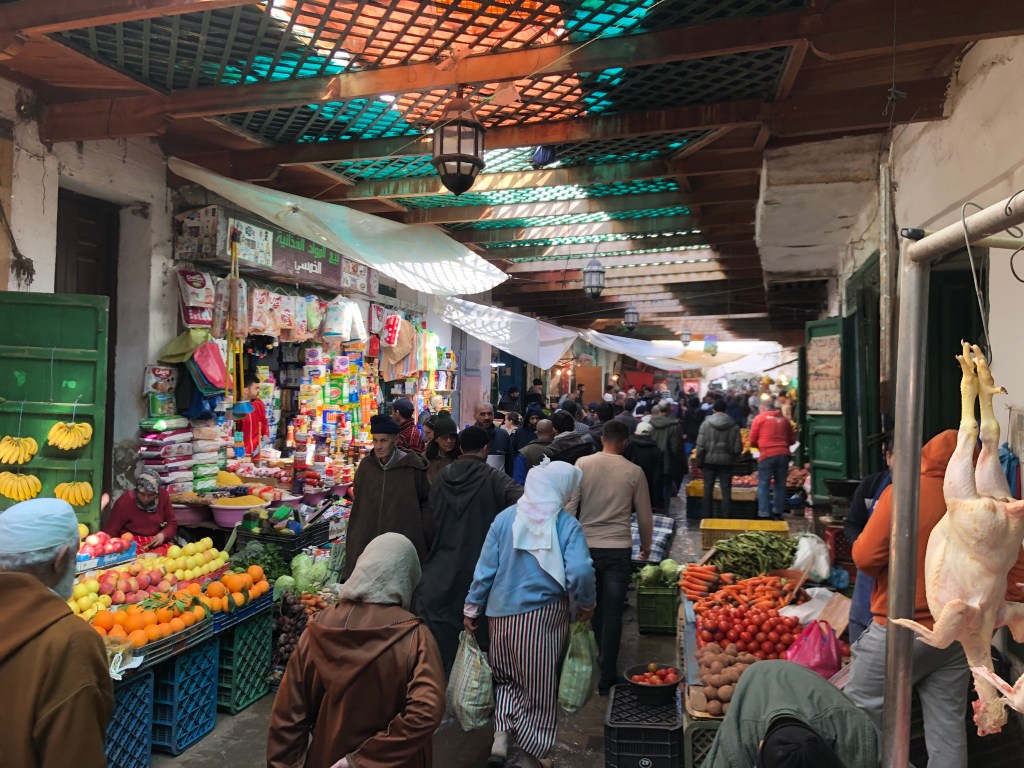
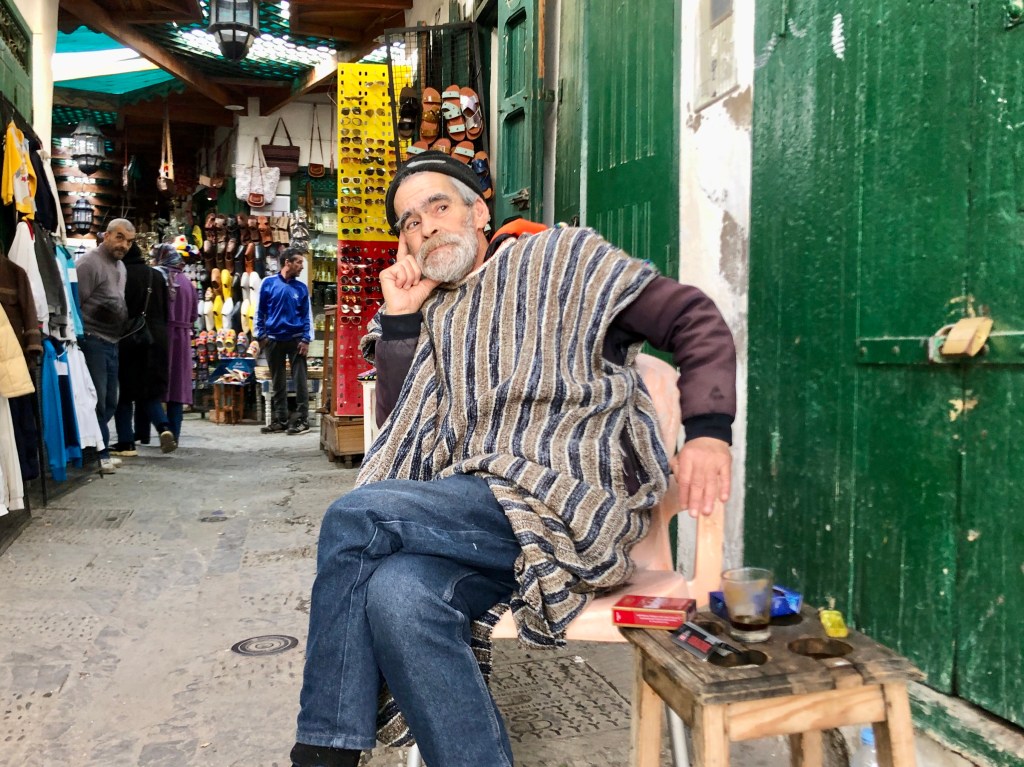


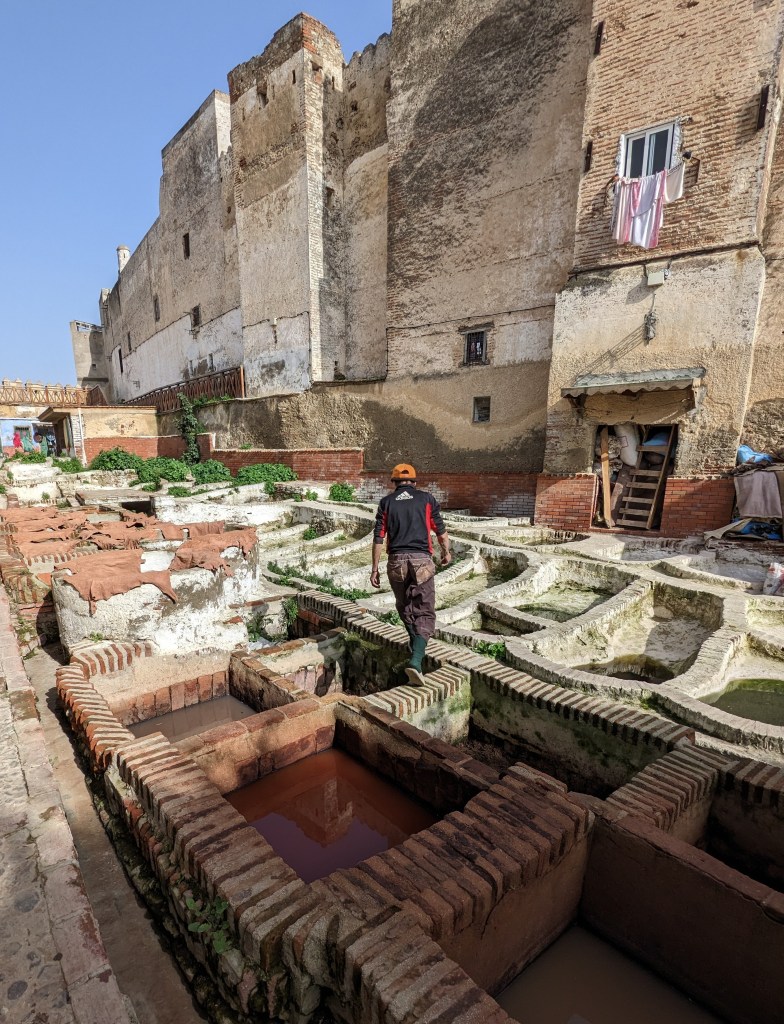
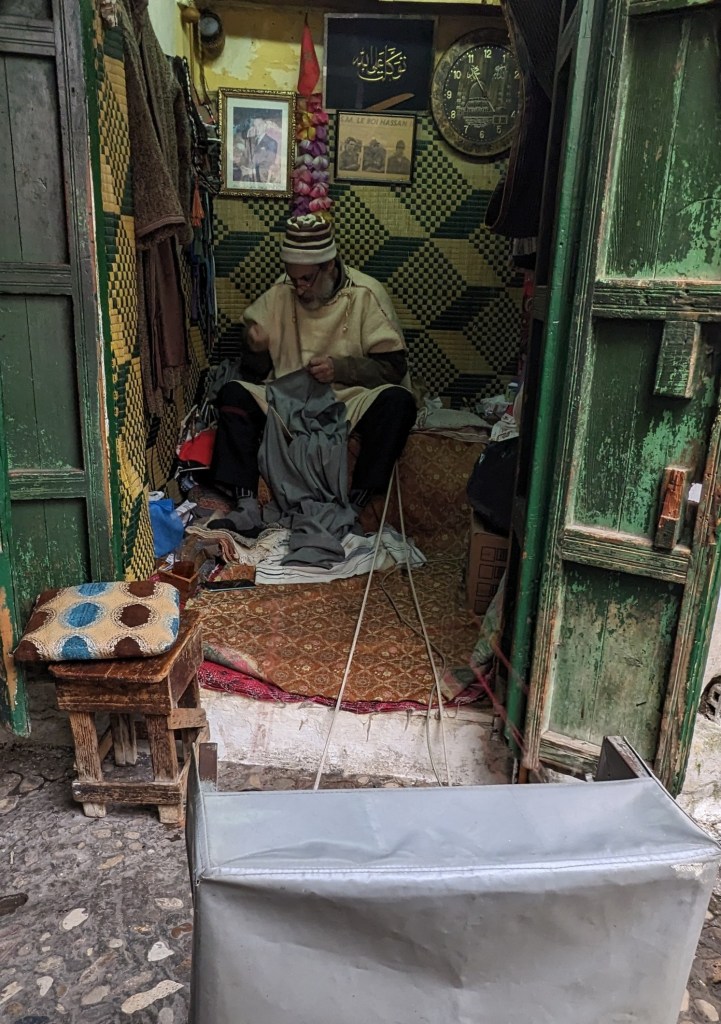
Architectural historians regard the Tetouan medina as the country’s finest and best preserved, despite being far less famous than those in Marrakech or Fez. We meet a friendly Moroccan guide named Abdoul who grew up here and takes us around, showing us the centuries old smoky wood fired ovens where people still bring their homemade bread dough to be baked in communal ovens, the mosques where we hear kids reciting the Quran, the old tanneries where animal hides are cured in stone vats of stomach-churning liquid, and the shops of artisans who spin yarn and weave on tools that would have been familiar to people hundreds of years ago. Inexplicably, we purchase a rug, which is beautiful but which I will also have to carry on my bike for the next week.
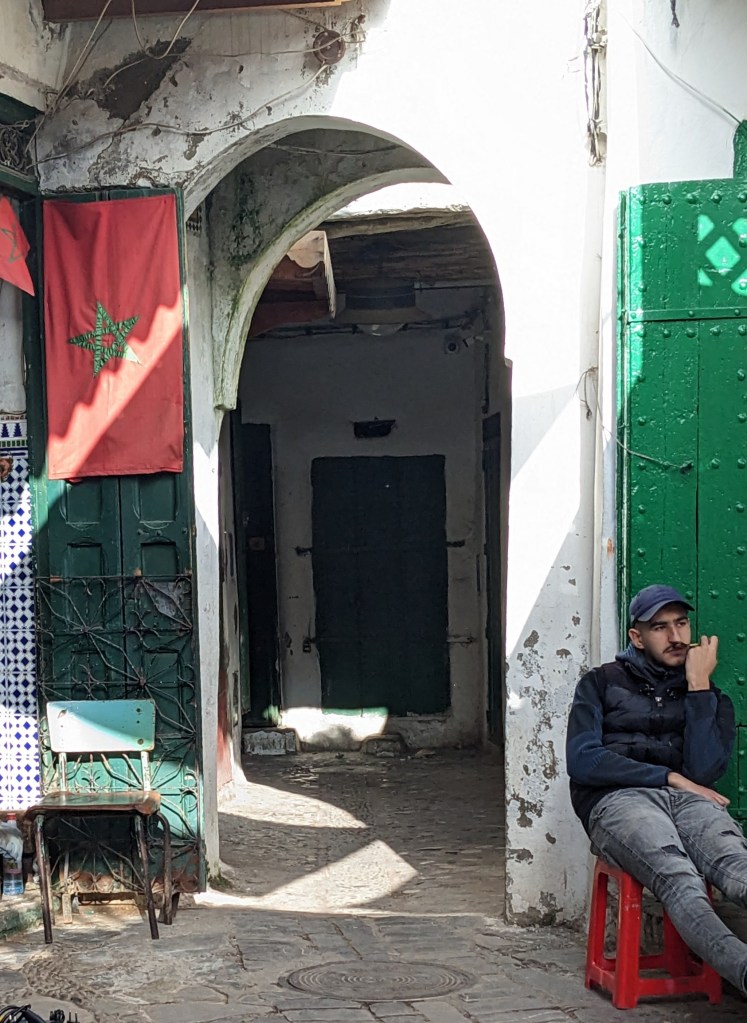

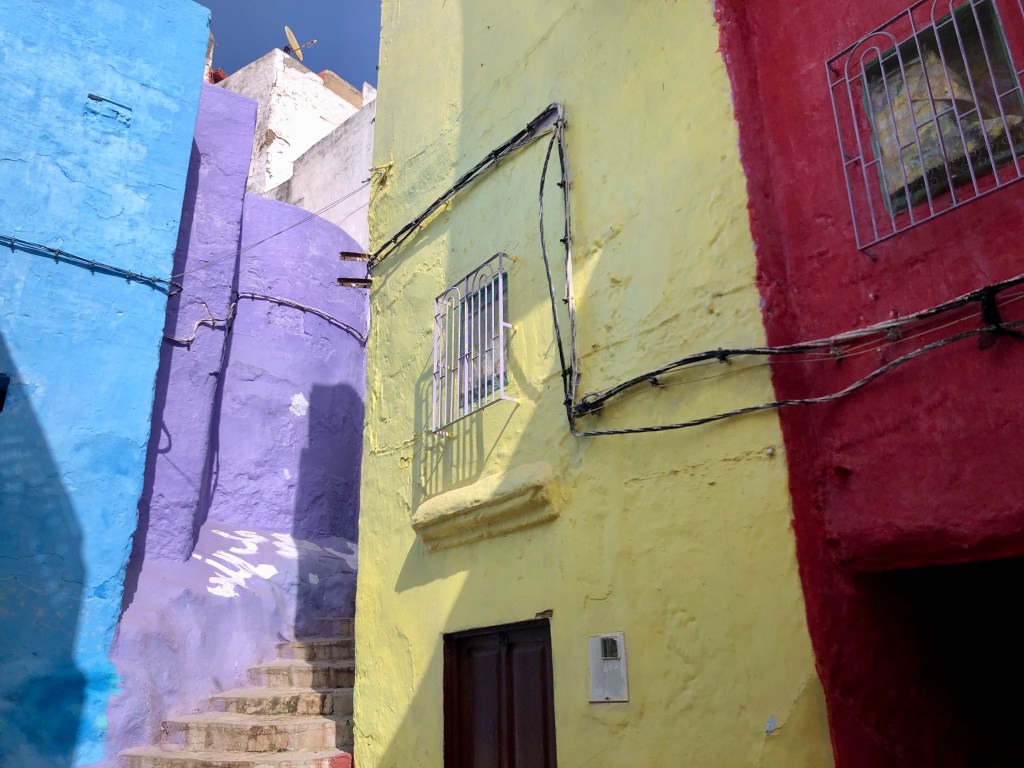
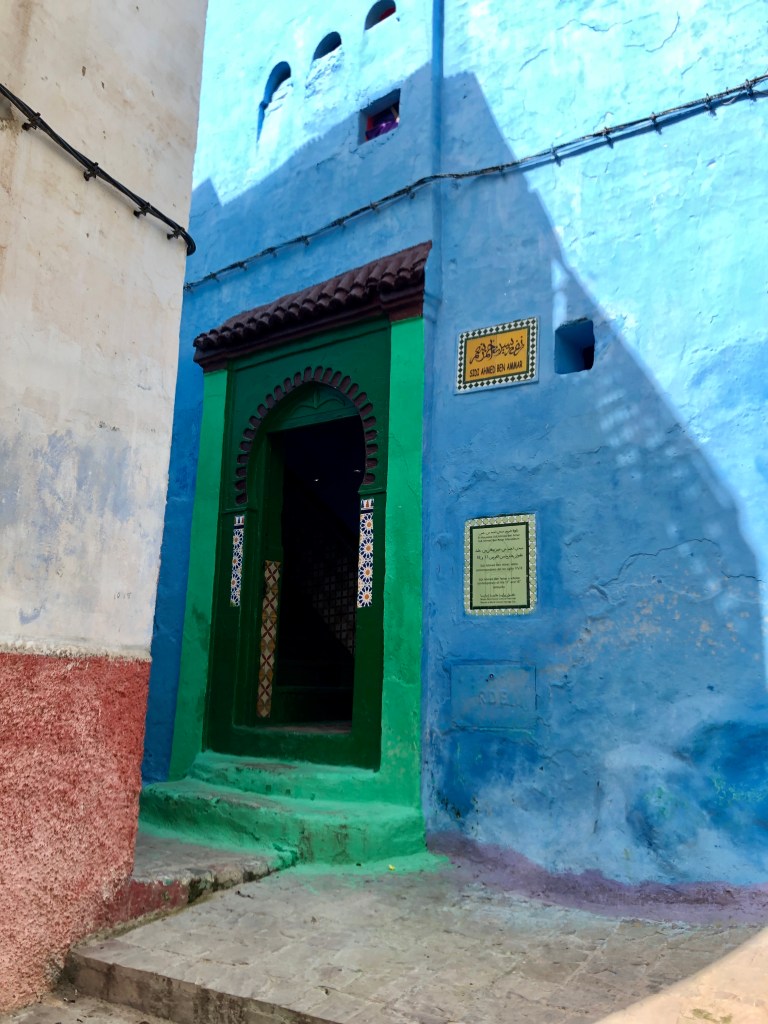
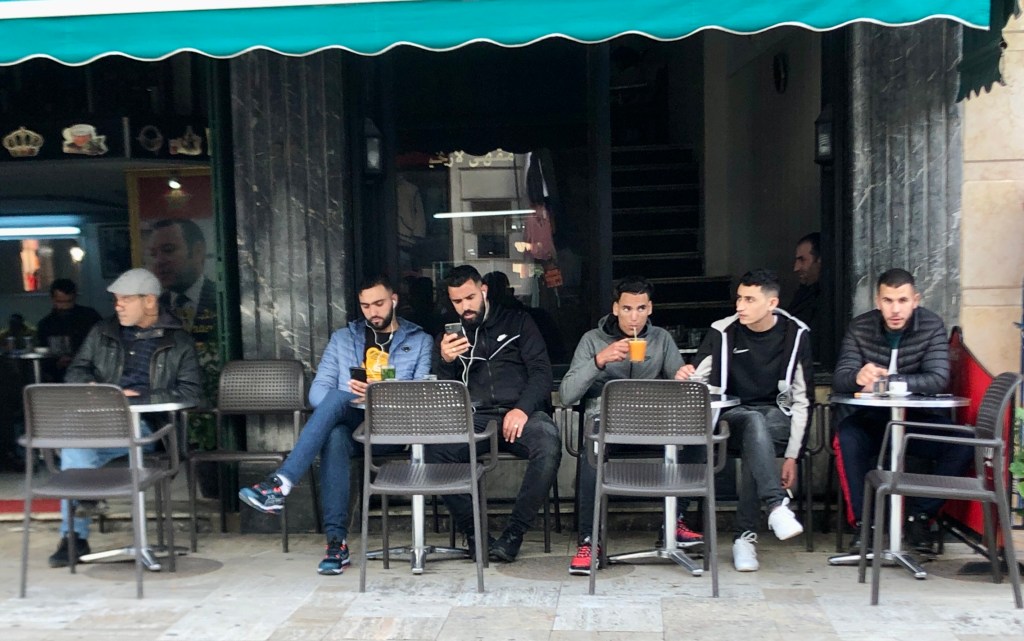
One of the things we notice is the number of men sitting in cafes drinking tea and chatting (and on social media). It is hard to know if this is a symptom of under-employment or a culture that prioritizes fraternity, or perhaps both.
 smallchainringbigworld
How big a rug??
LikeLiked by 1 person
It’s pretty small. Fits in a pannier!
LikeLike
Well, too big for a bike touring souvenir, that’s for sure. But in the rug category it’s pretty small, say sleeping bag size. When we bought it the (obviously very talented salesman) said he could wrap it up tight “like a hamburguesa.”
LikeLike
Do they have a rug that’s roughly 4×6, mostly blues and reds? I’ll pay you back, Gabe. Thanks.
LikeLiked by 1 person
You got it buddy! Anything else? Small clay oven perhaps?
LikeLiked by 1 person
Don’t be silly. But a few of the larger tanned hides! Only if you have room. 😉
Hugs and love. So much joy reading along.
LikeLike
Fascinating and reminiscent to read about your travels in Morocco. It was our last stop in 1980 when my late husband and I backpacked around Europe, Asia and Africa for 7 months. We found more handiworks and artifacts in Morocco to bring back, including a rug like you. Enjoy!
Mary
LikeLike
Photo of rug, please! Long live the private guides and the mint tea!
LikeLiked by 1 person
Rug is tightly wrapped up for now. Will have to a photo unveiling when we get home.
LikeLike
Amazing posts, Gabe and Allegra. We may buy you dinner for the full account before we take off in late September!
LikeLike