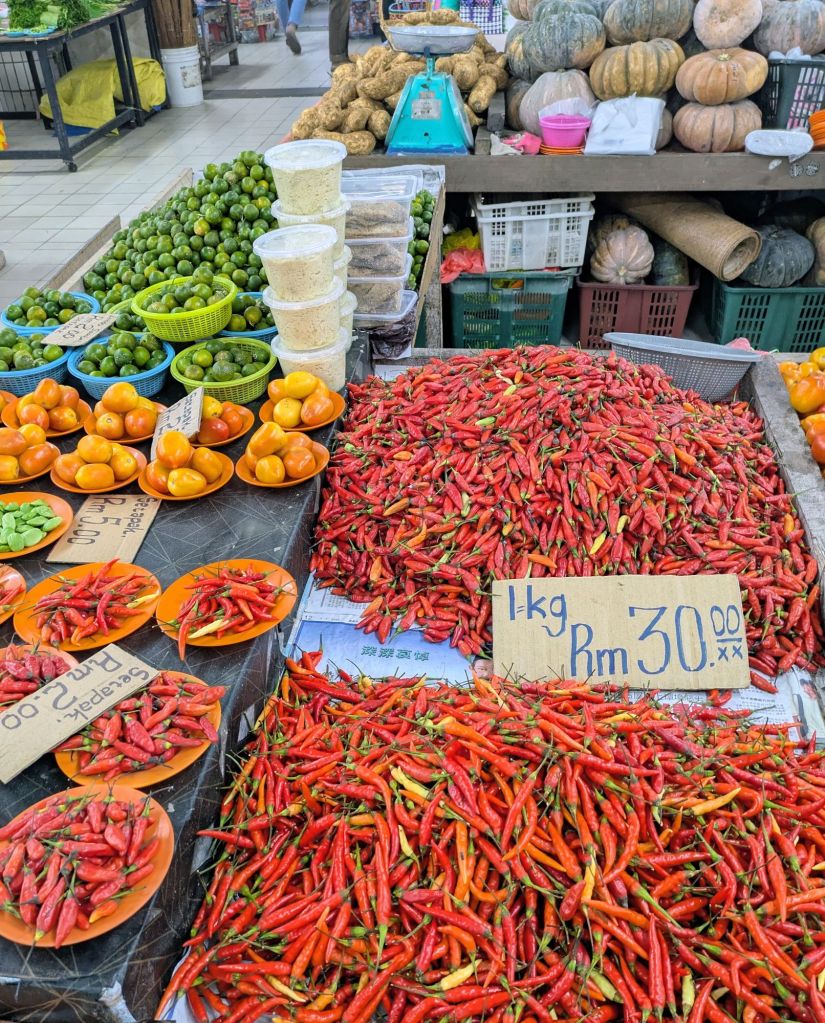
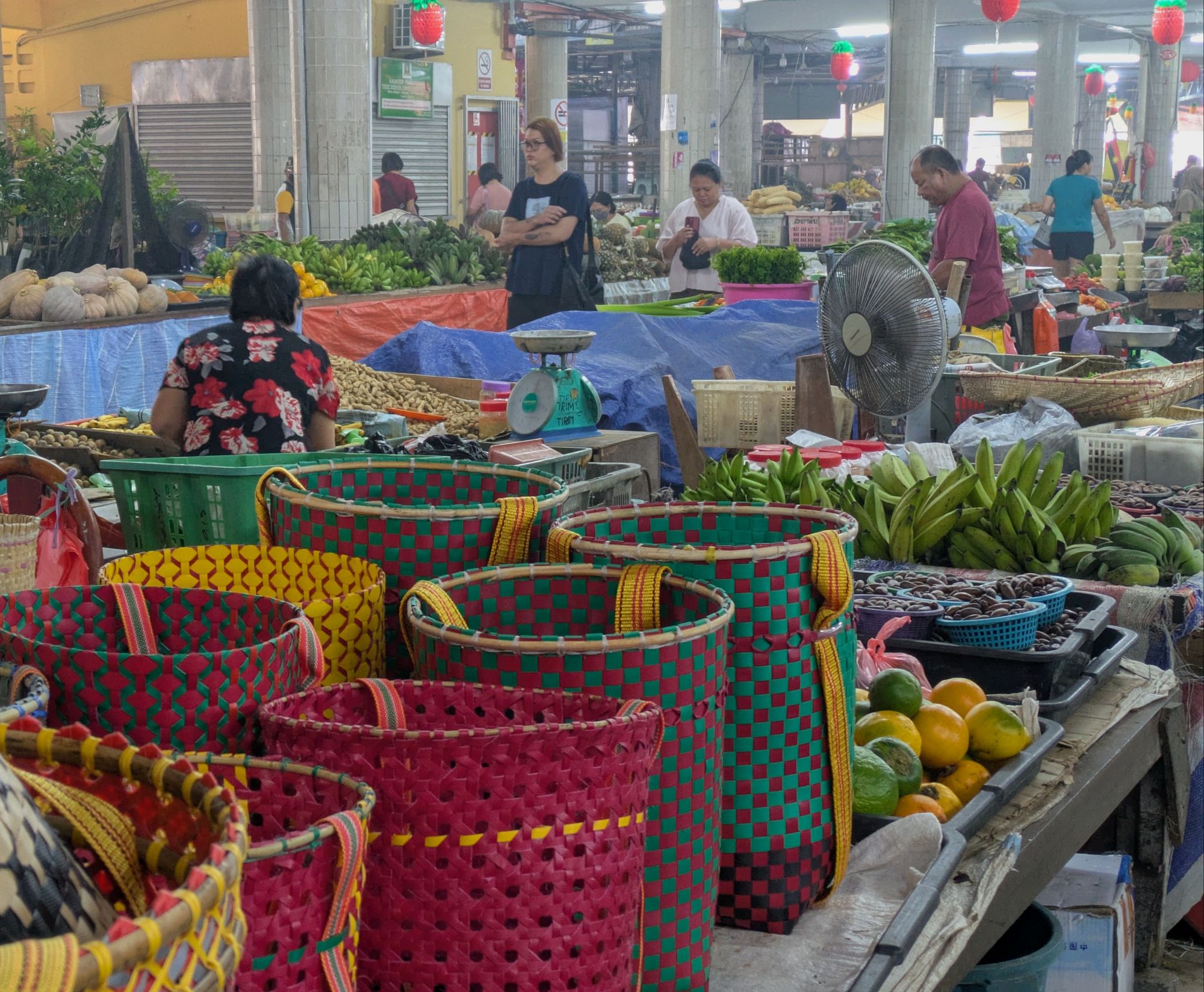
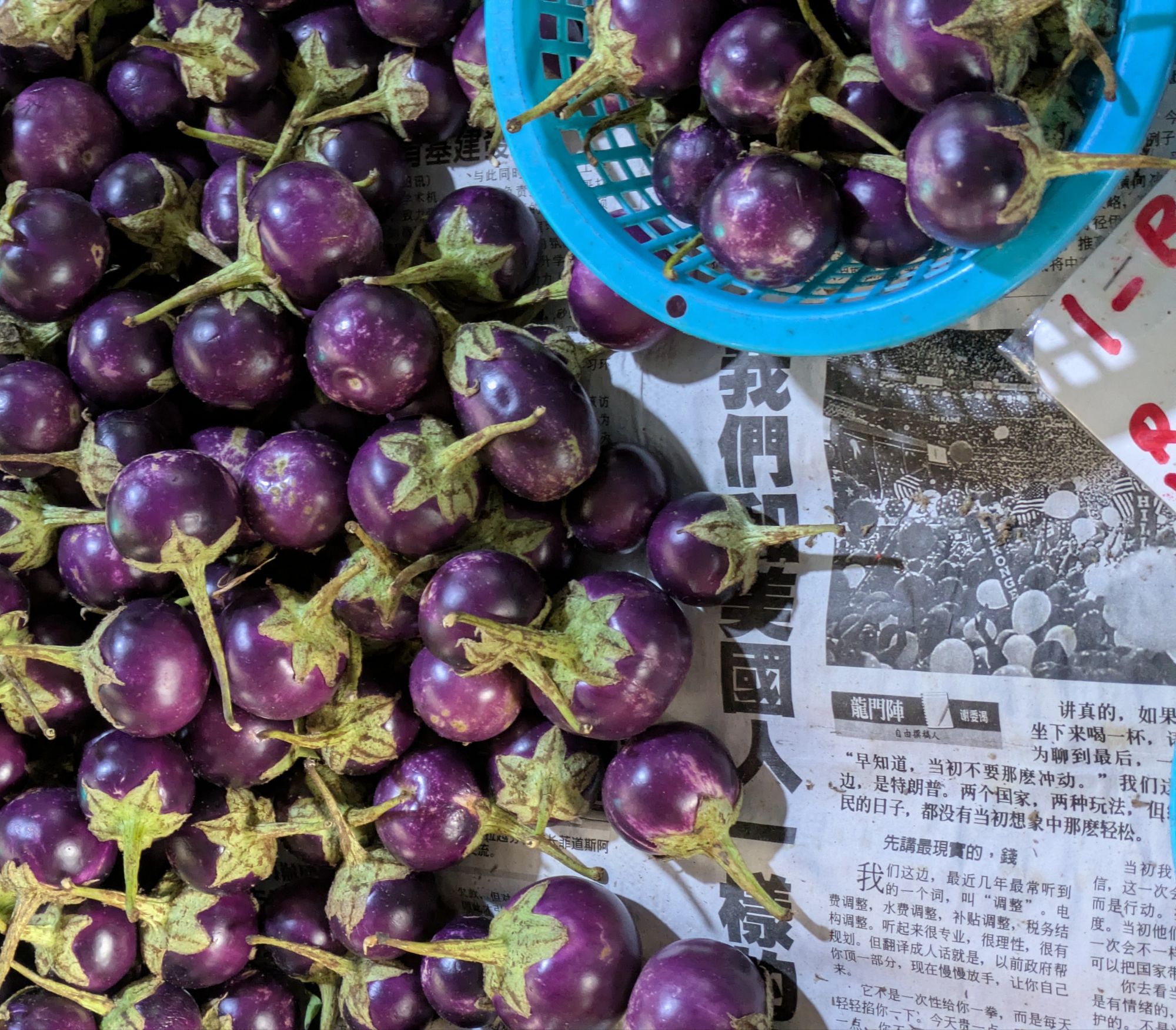
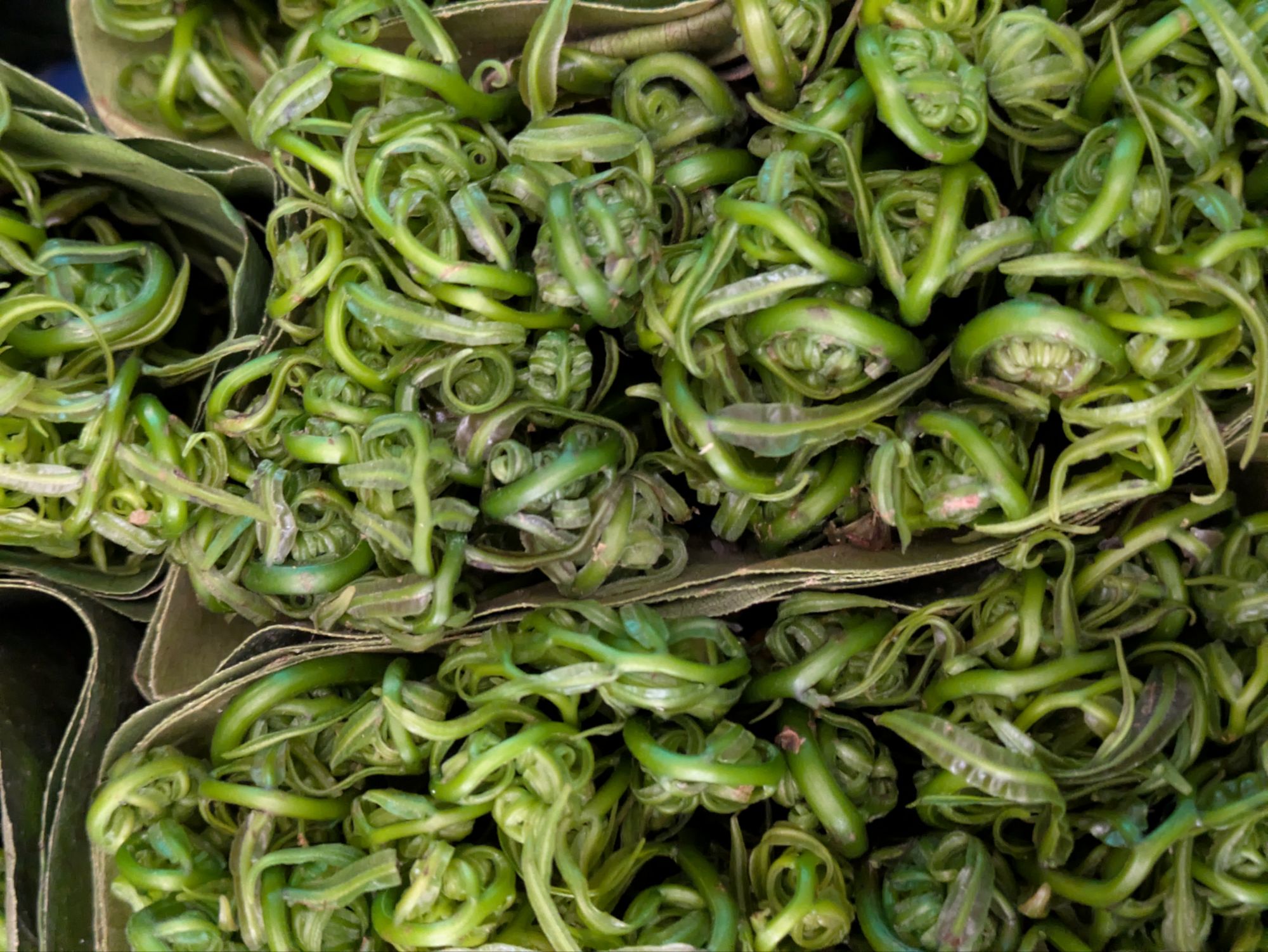
Three days in the deep Borneo jungle are an excellent antidote to the wildfire smoke. Nanga Sumpa is a small Iban village three hours by longboat across the Batang Ai reservoir and up the Menyong River. It is adjacent to the Batang Ai National Park, which has one of the country’s largest remaining wild orangutan populations and remarkable bird and other wildlife habitat. Though we are disappointed not to be cycling, the hazy drive with our guide Tono to the longboat jetty makes it clear we have made the right decision. On the way, we stop at a market in Serian for provisions for the next three days. There is an immense variety of fresh fruit, vegetables and meat and it’s difficult not to buy one of everything but the smoke is so bad that just wandering around the market causes our eyes to water.
Once we arrive at the jetty, board our longboat, cross the reservoir and access the narrow jungle river, the smoke lessens considerably. We learn that the high humidity, dense multi-layered canopy, and limited wind work together to create a microclimate that actively filters and settles out airborne pollution like wildfire smoke. It’s a relief.
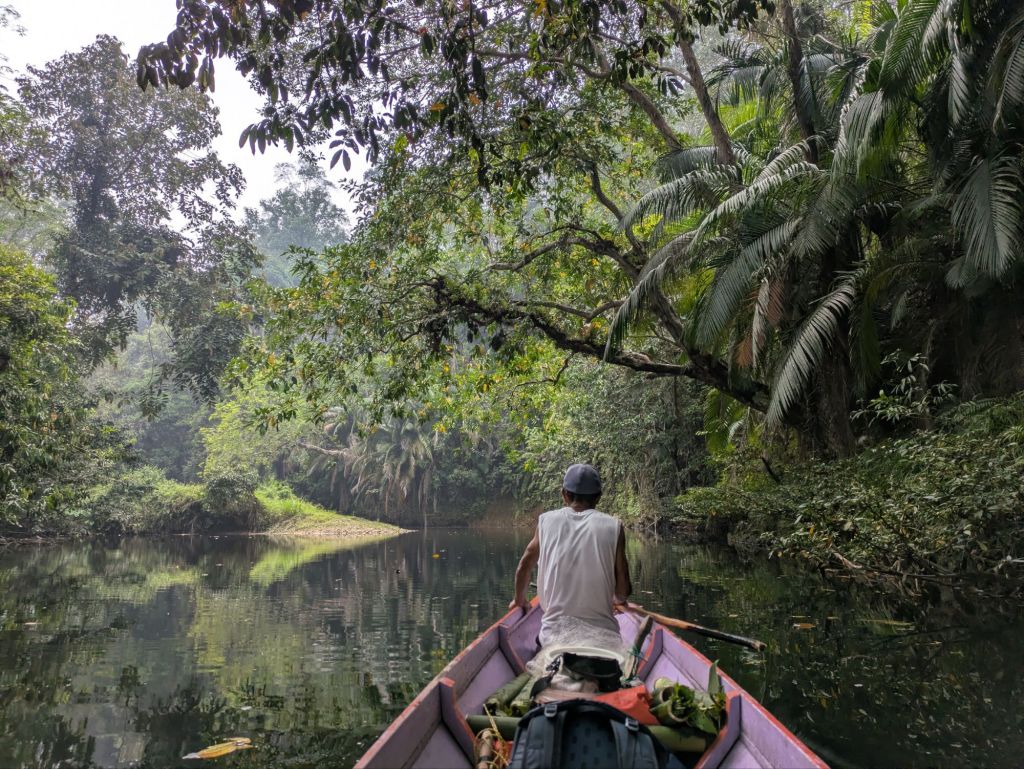
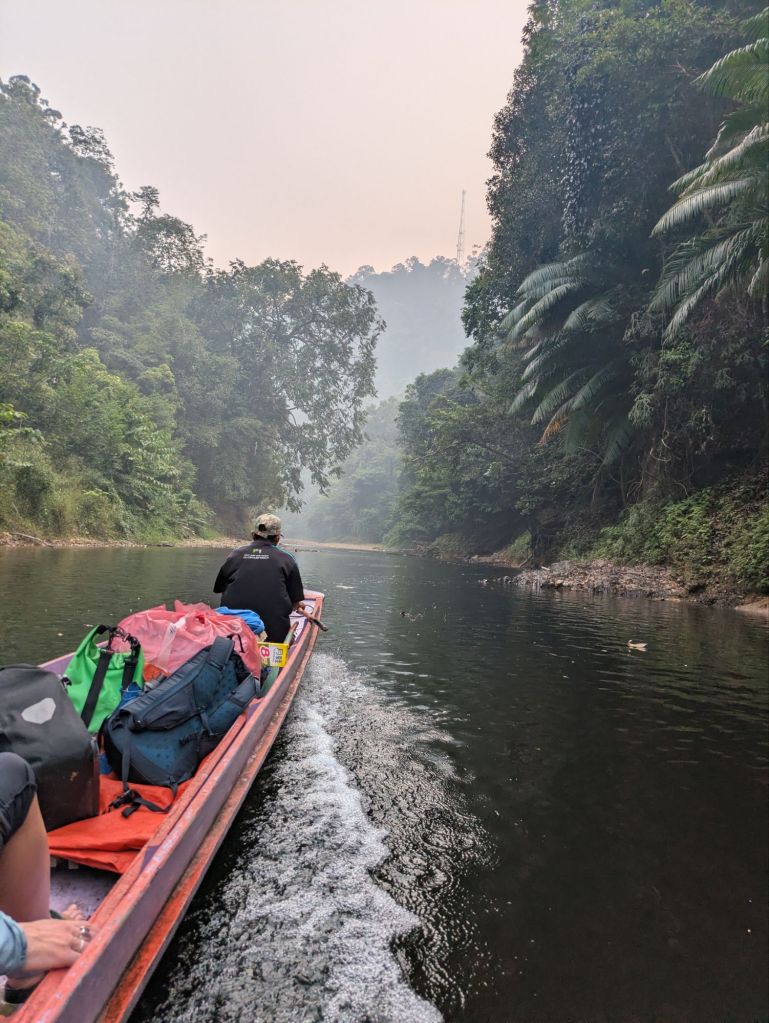
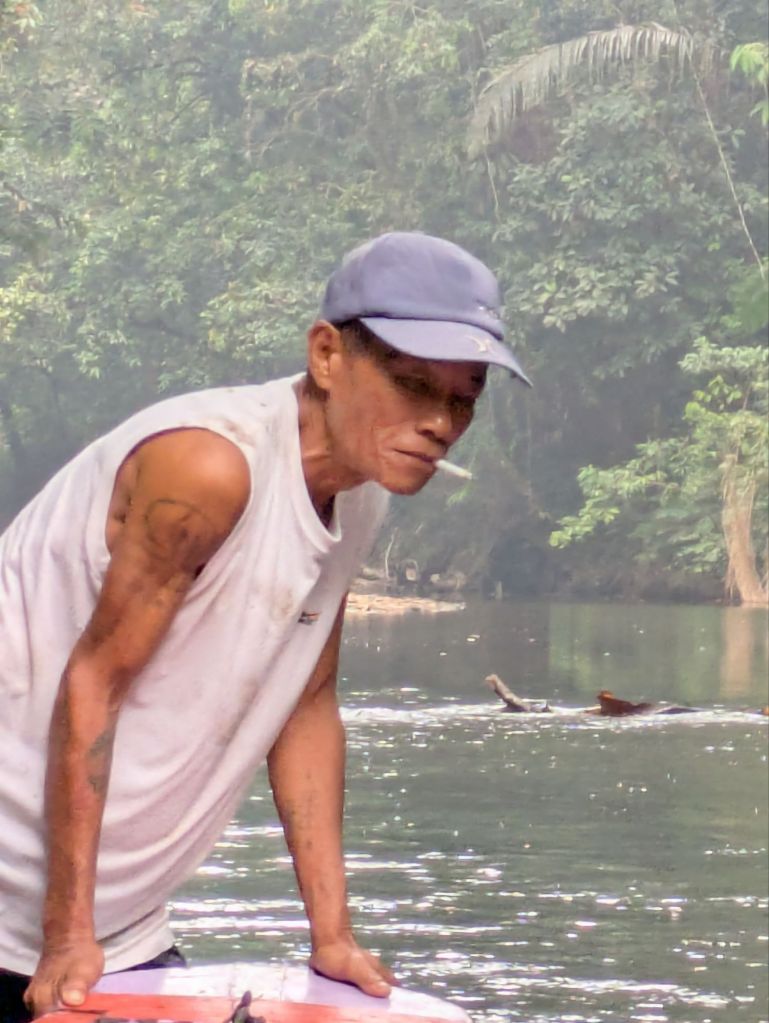
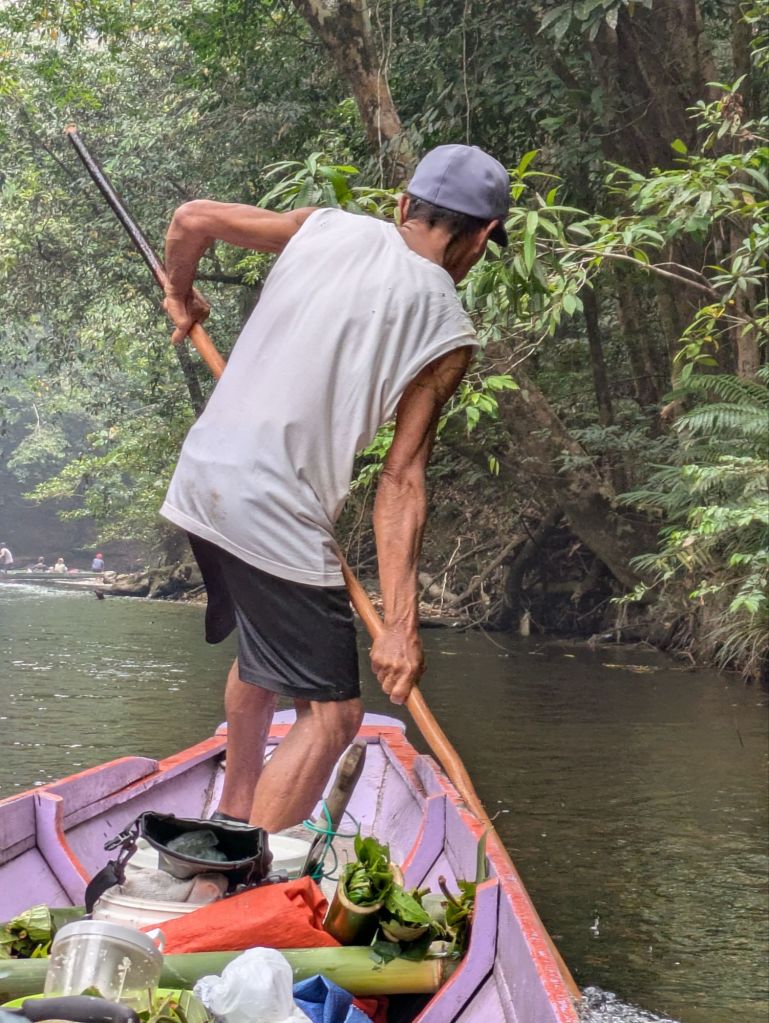
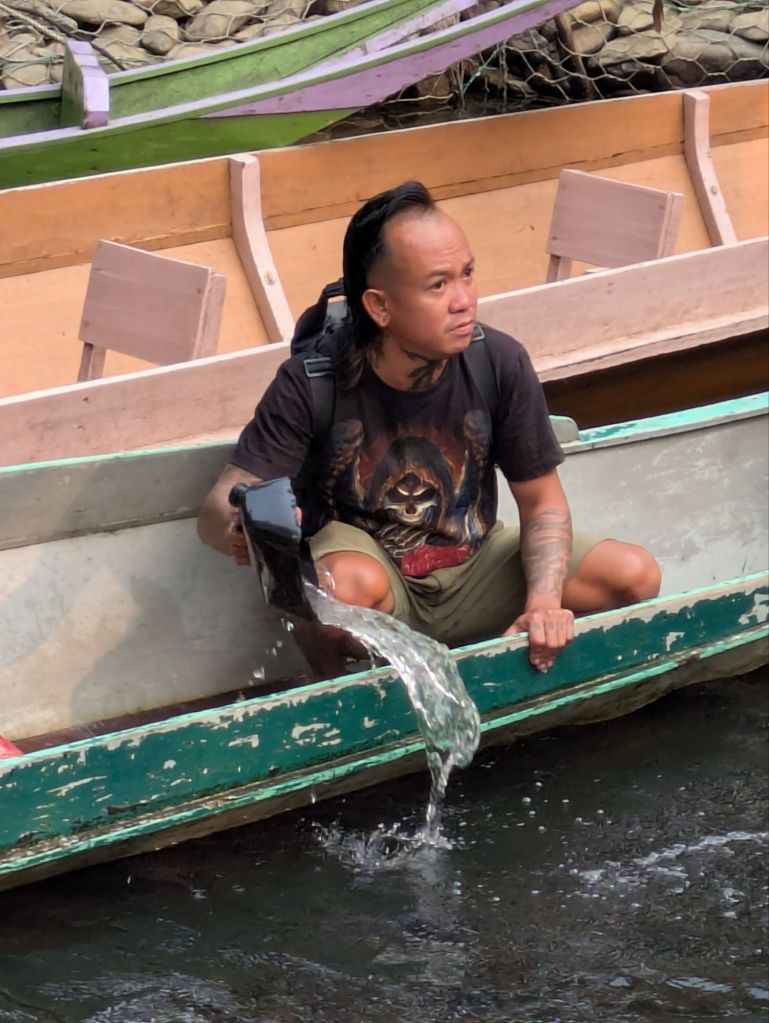
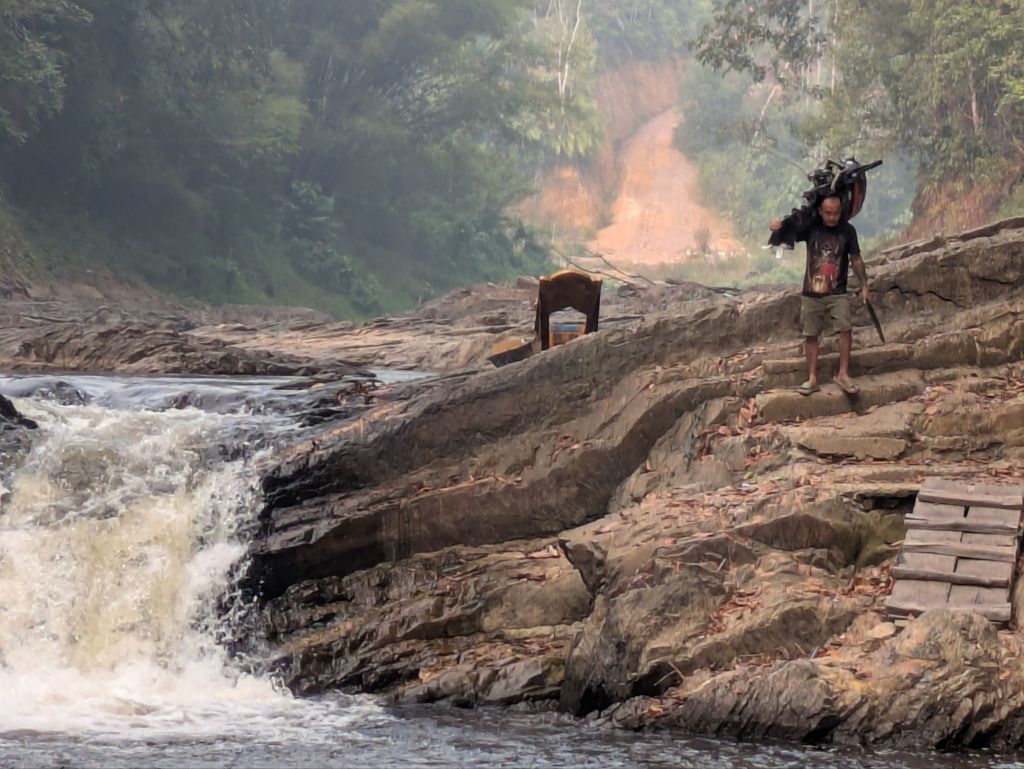
The trip upriver gets progressively more interesting as our boatmen navigate through narrower and narrower channels. The boat is handmade, about 20 feet long with a width and draft similar to a canoe, so it’s quite unstable. A younger boatman sits at the back and maneuvers an outboard motor while an older boatman stands at the front, alternating between a long pole and a handmade paddle to help steer. Both smoke cigarettes incessantly, including while refilling the gas tank. The two of us plus Tono and our gear ride in the middle. It’s precarious but exciting, especially as we weave around (and mostly avoid) obstacles in the river. As we approach shallow sections, the rear boatman guns the engine and then pulls the outboard motor out of the water, letting the boat bump and scrape across the bottom while the front boatman poles furiously (still smoking) to maintain momentum and not lose balance. At one point, a small waterfall requires a portage and the rear boatman hoists the outboard motor onto his shoulder and scrambles over the rocks in flipflops. As we progress, the rear boatman periodically bails out the river water that seeps in through the cracks in the hull. It’s all a bit like watching an amateur opera performed on water and set to the music of a lawnmower.
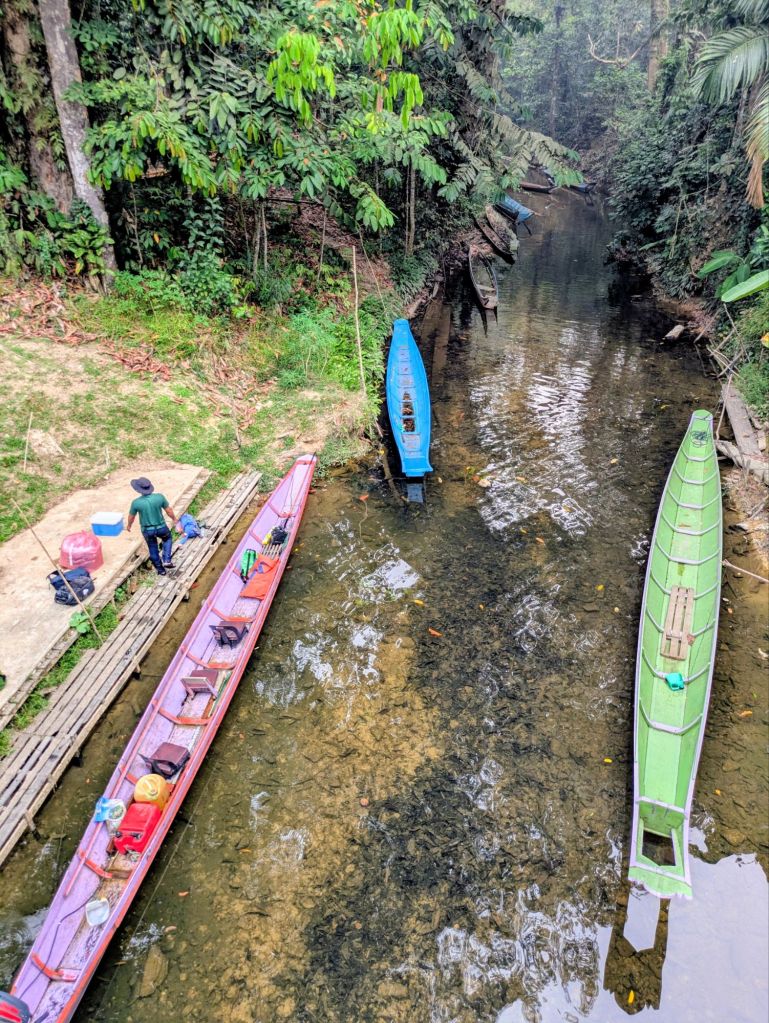
We arrive at Nanga Sumpa. The lodge is a simple wooden open air structure surrounded by dense jungle with private sleeping rooms, mosquito netting over the beds and a small common area overlooking the river.
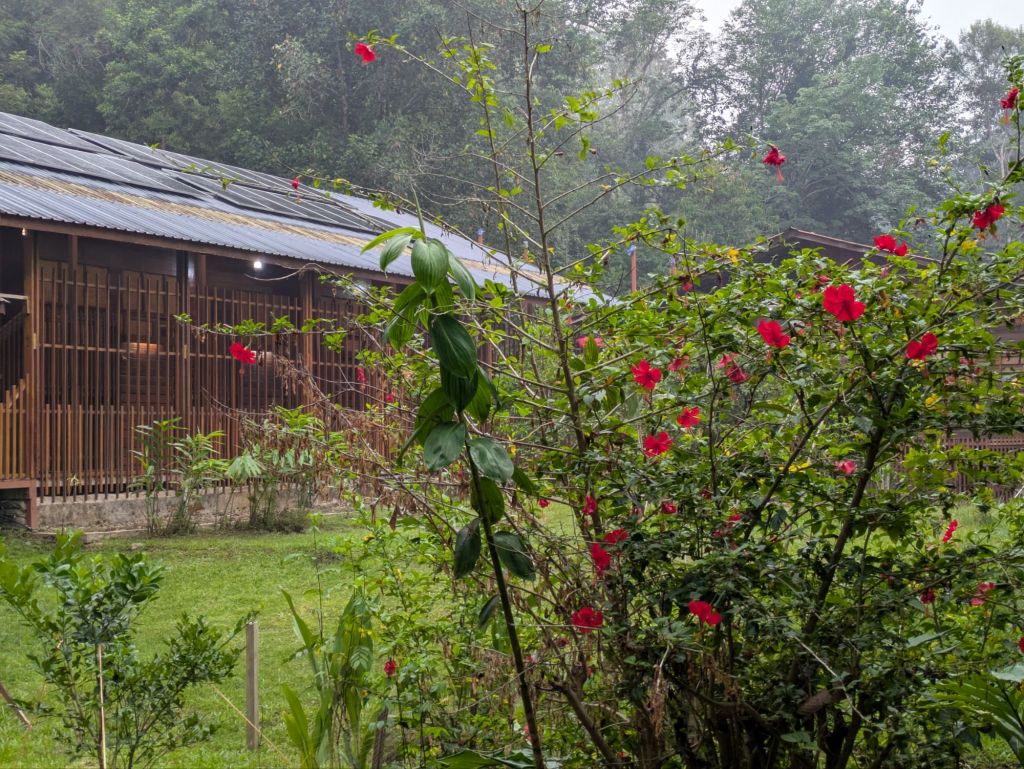
The bird song is beautiful and we enjoy a relaxed evening that includes a visit to the village longhouse, where 20 families live communally, and a shot of homemade tuak (fermented rice wine) with the chief. He wears a Germany soccer jersey and checks his phone regularly. During COVID, the Malaysian government promised (and seemingly delivered) universal internet access and the evening scene in the longhouse is the confluence of long-standing native cultural traditions (older women weaving baskets with plant fiber collected from the jungle) and thoroughly modern habits (kids watching Tik Tok videos on iPhones).
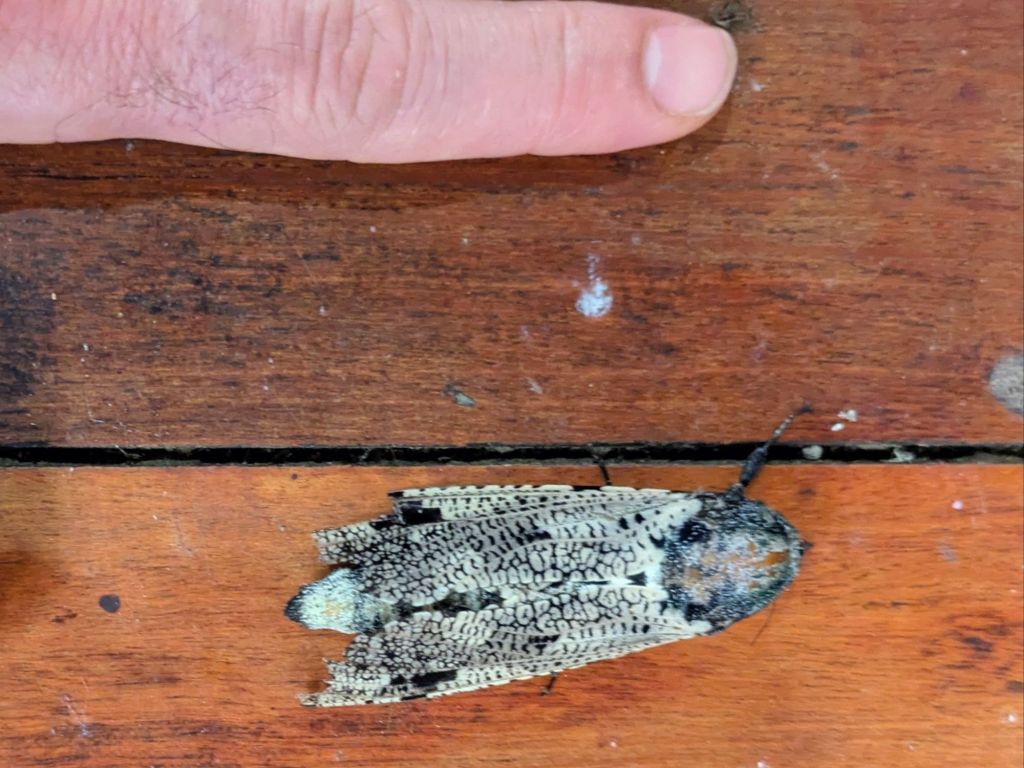
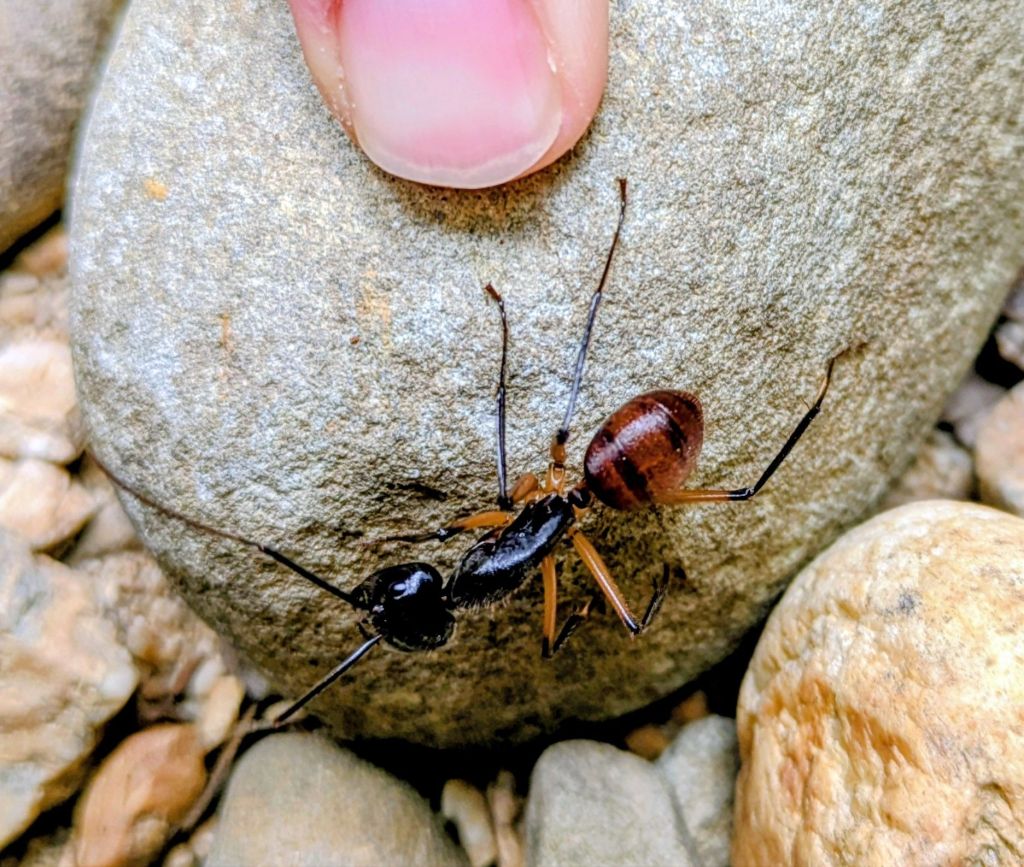
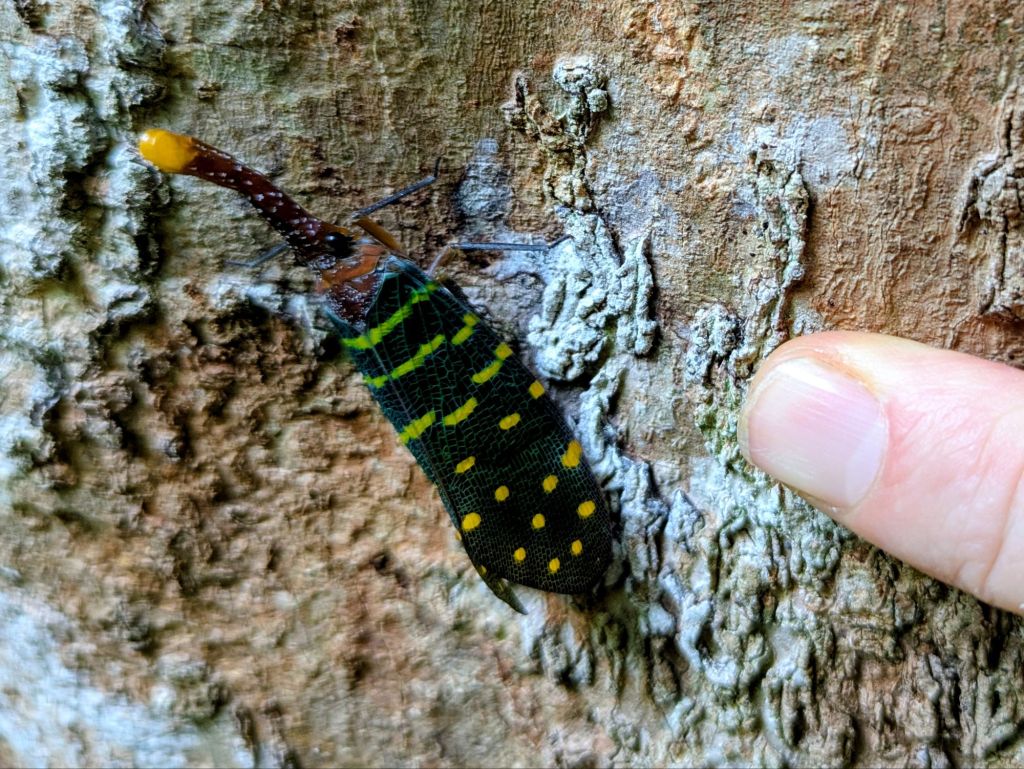
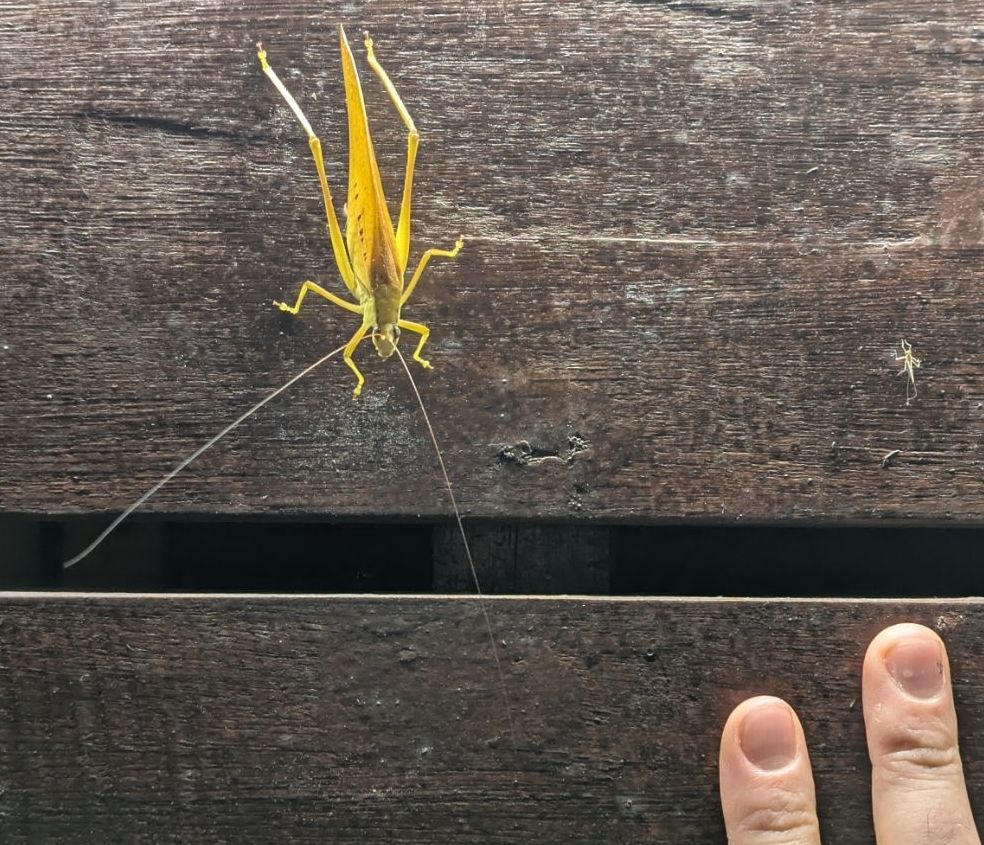
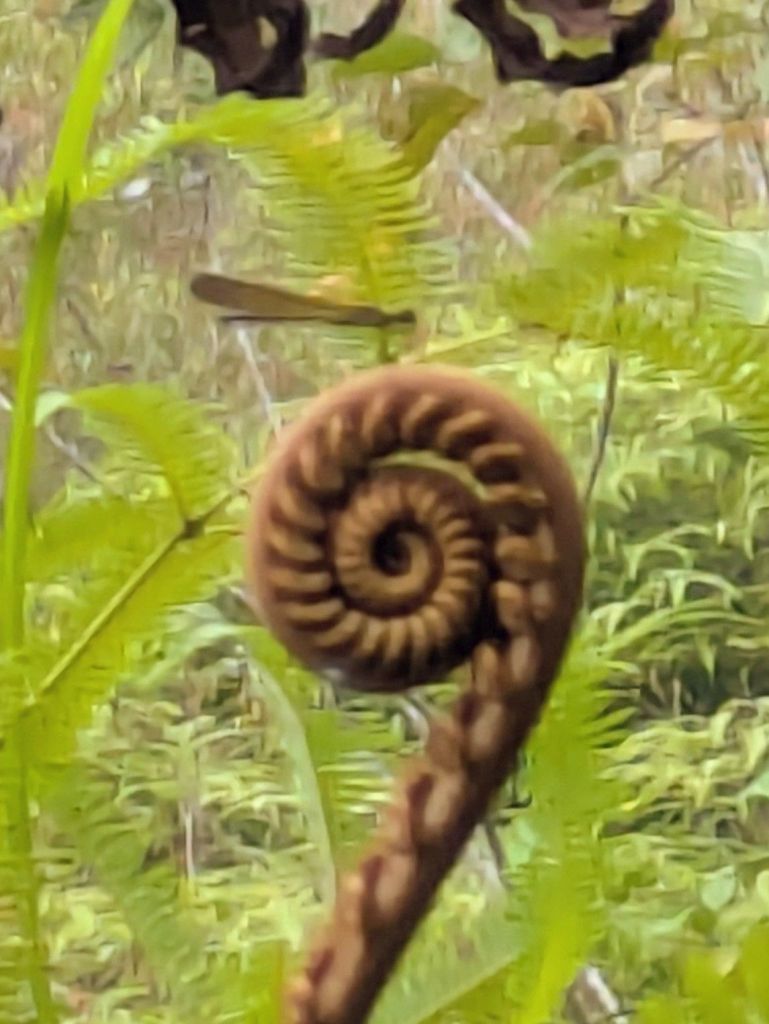
We spend the following day hiking through the jungle, enjoying the lush smoke-free air, earthy smells of flowering trees and ripe jackfruit, unfamiliar sounds and scanning the trees for signs of orangutans. The variety and size of the insects is phenomenal.
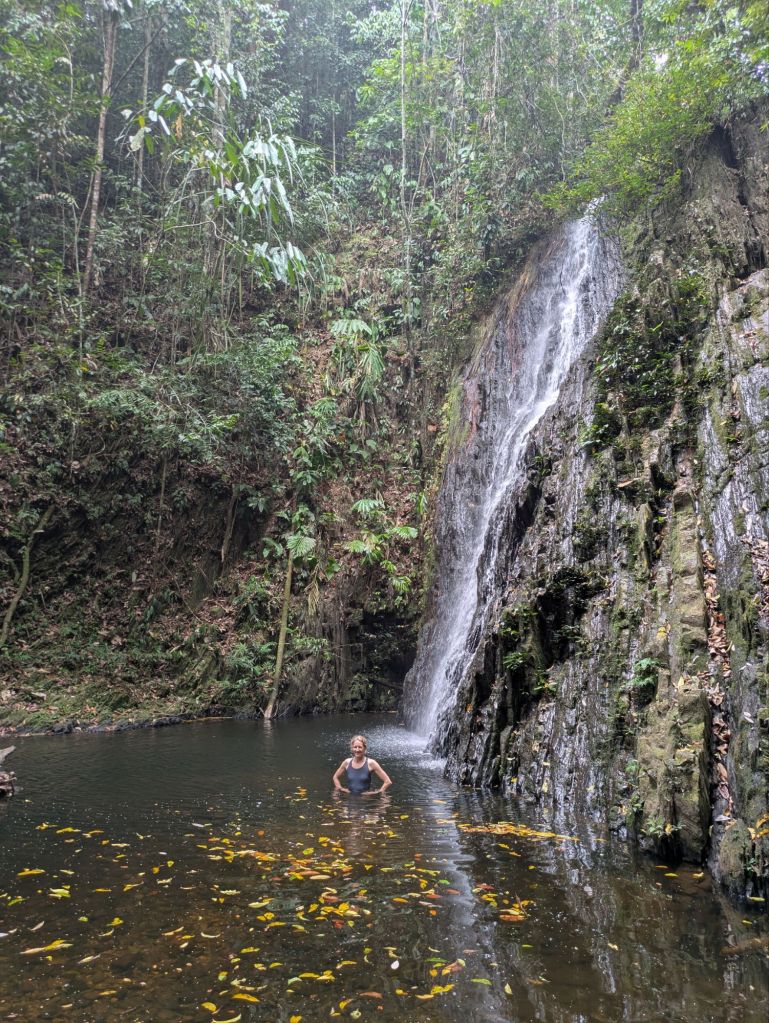
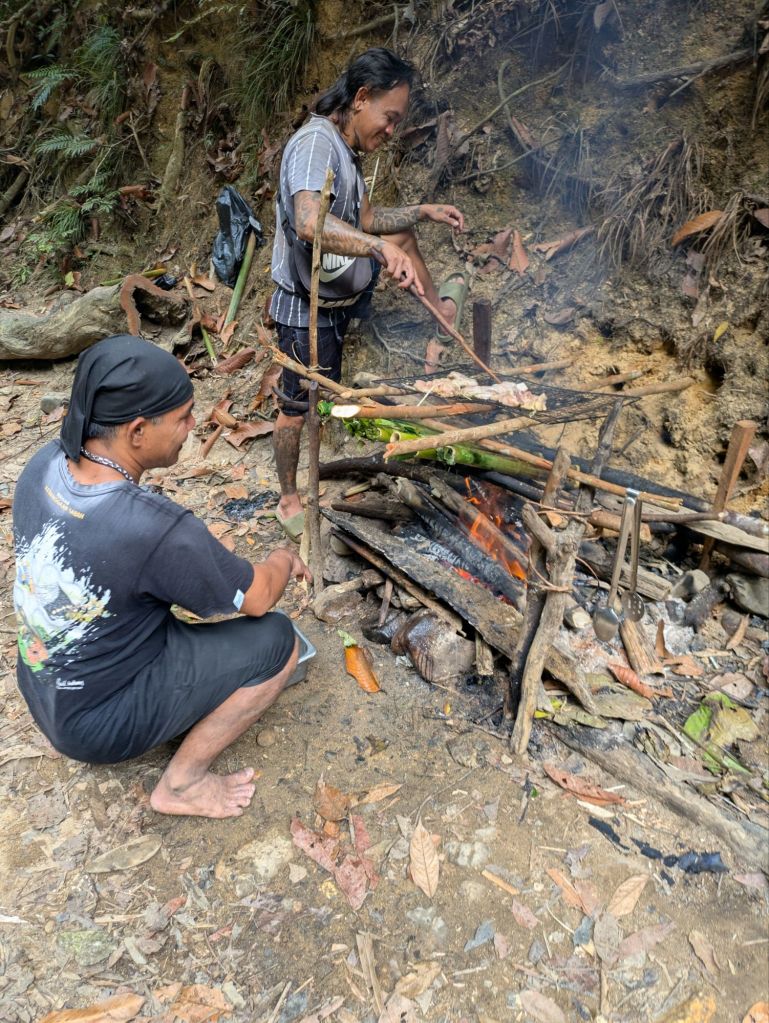
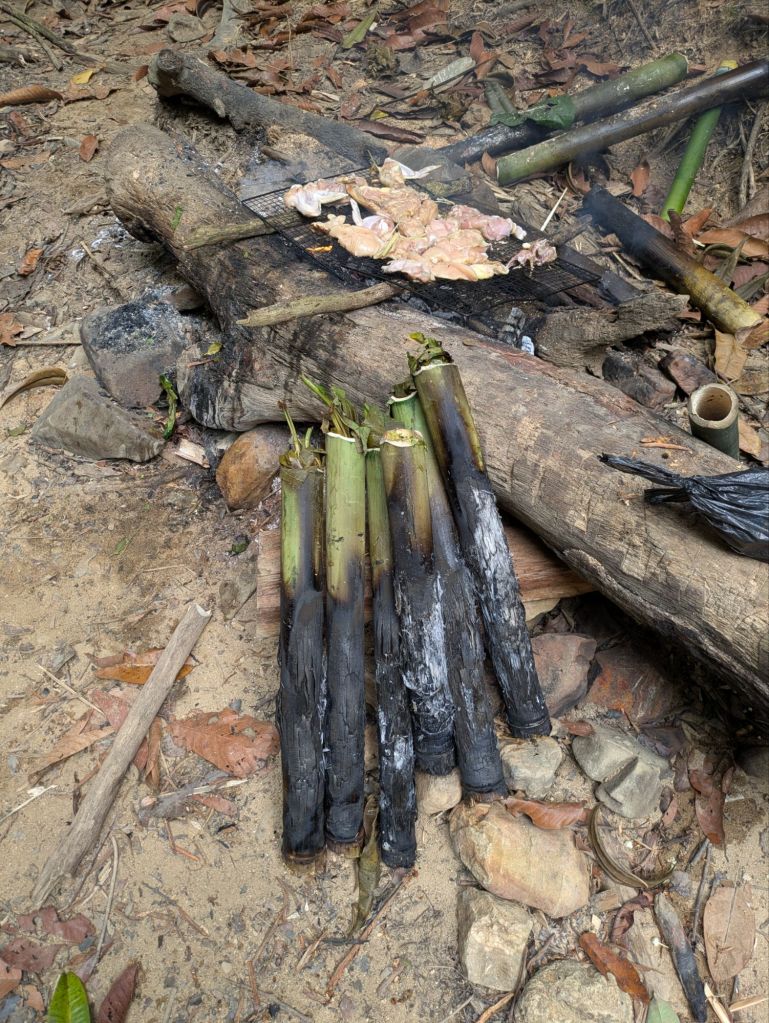
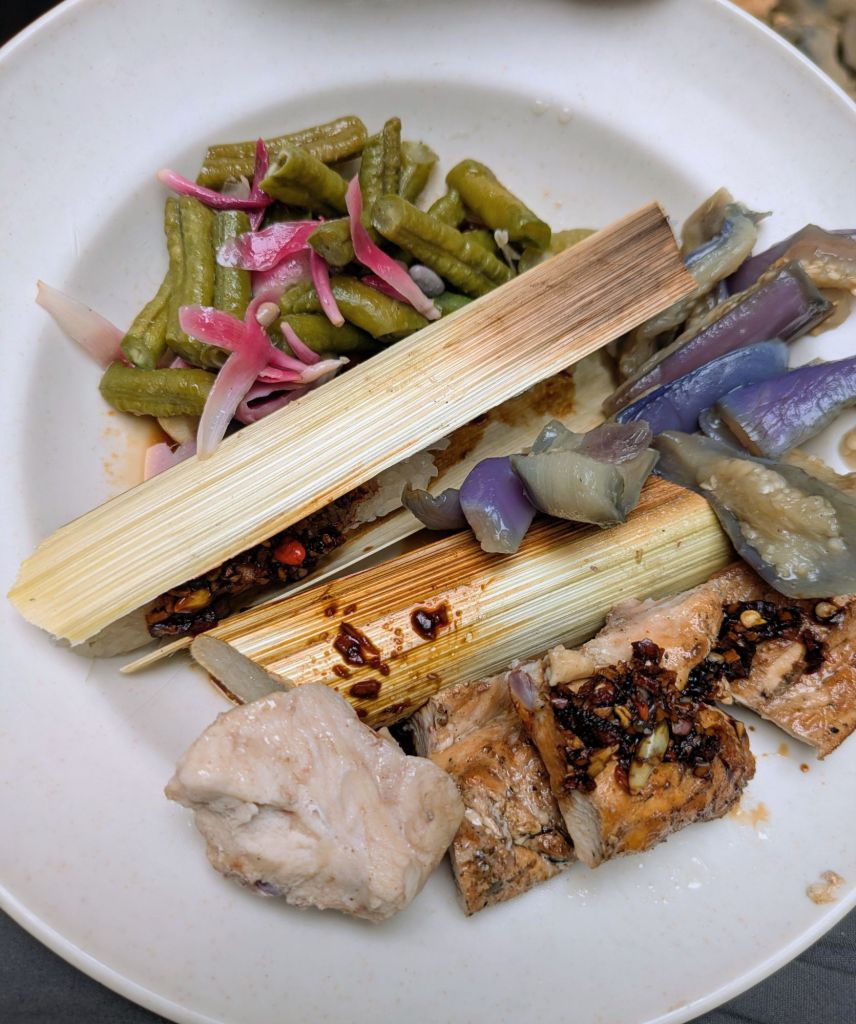
At midday, we stop at a waterfall for a swim and let the small fish called Ilan Pelian nibble our toes. Our boatmen meet us and prepare a delicious lunch of chicken with jungle herbs cooked over an open flame, sticky rice and eggplant steamed in thick bamboo stalks that are placed directly into the fire, and an eye-wateringly addictive sauce of diced chilies, shallots, grated wild ginger and soy sauce.
We boat to another trail and spend the afternoon hiking back to the lodge. We see giant squirrels, amazing flowers, berries, insects and snakes, but no orangutans.
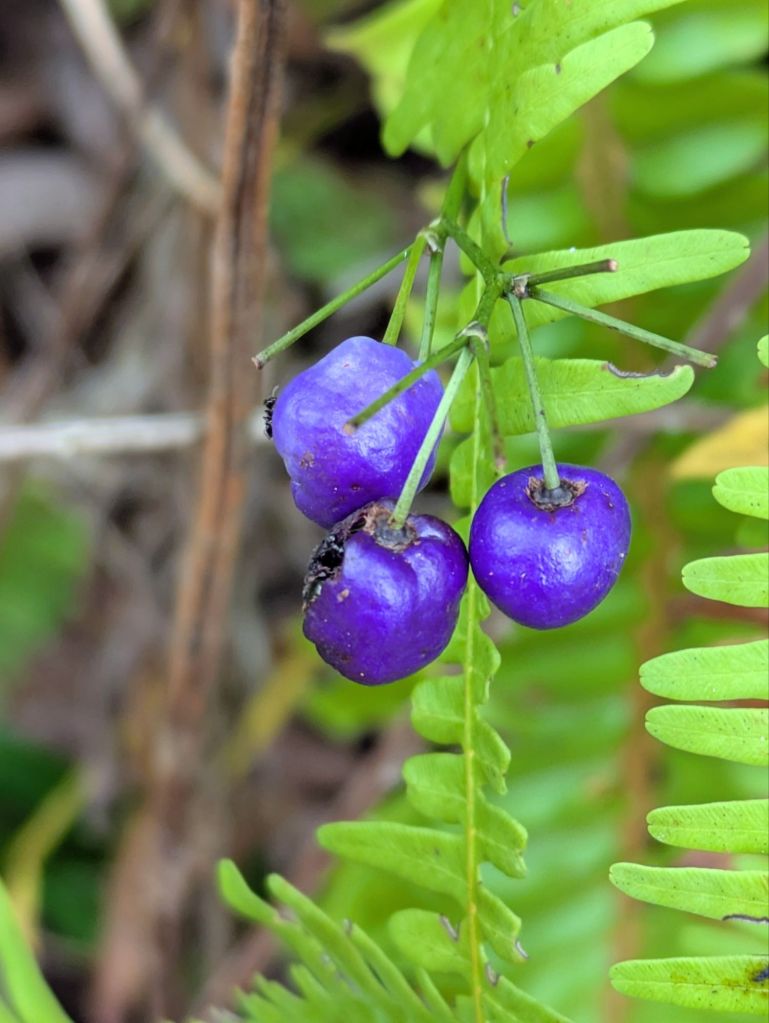
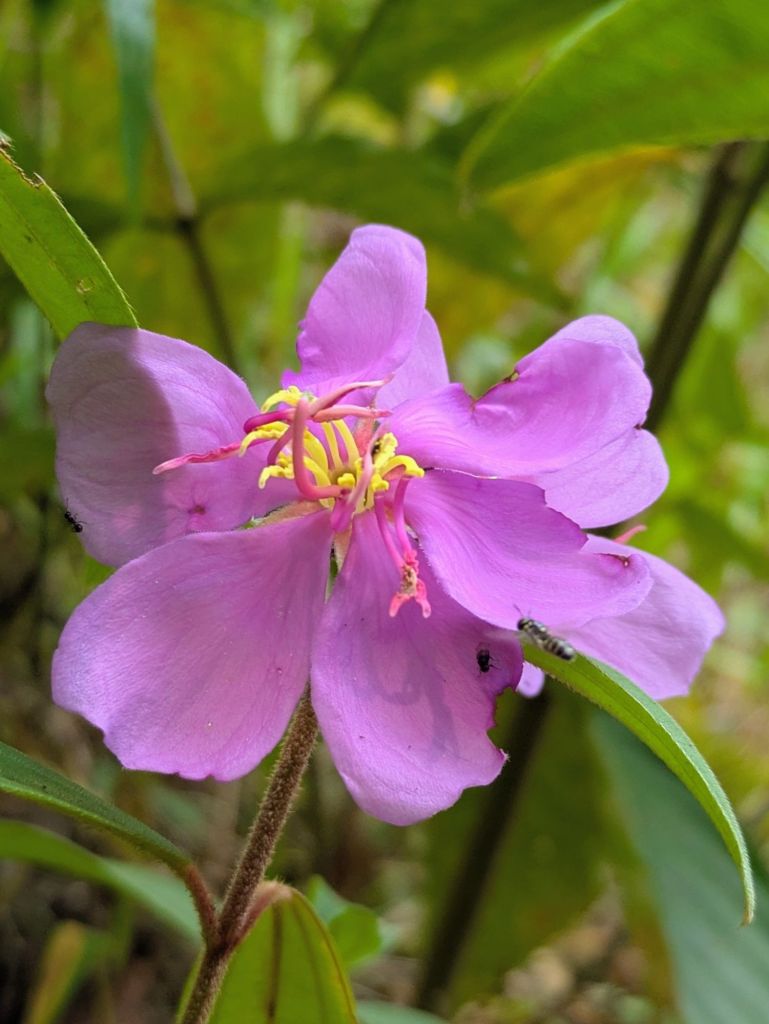
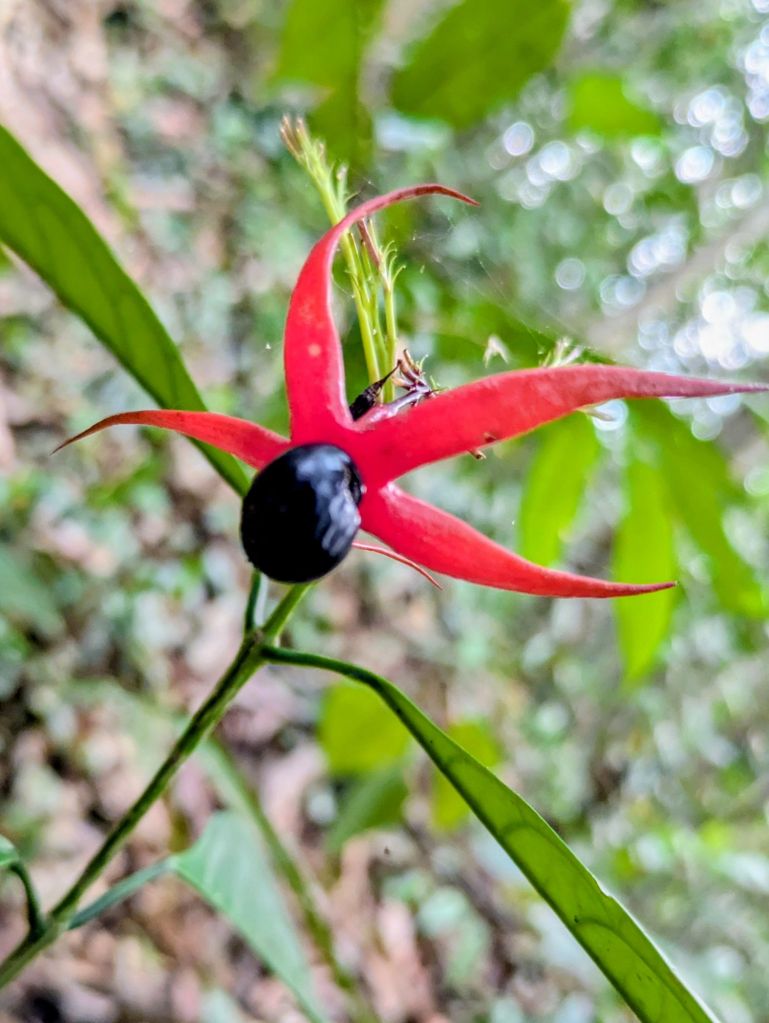
Our final day at the lodge begins with extraordinary bird watching from the lodge. We see vibrantly colored stork-billed kingfishers and blue headed pittas while we sip coffee. Our boatmen arrive and we get back into the longboats for the three hour trip downriver. We fly to Singapore tonight and are a bit disoriented by the prospect of starting the day deep in the Borneo jungle and ending it in one of the world’s most modern and densely populated cities.
This trip has not been what we imagined, but despite the smoke, we have loved the Sarawakian people, the delicious food, and the astounding natural beauty of this part of Malaysia and Borneo. We hope to come back one day to explore it more deeply under clear blue skies.
 smallchainringbigworld